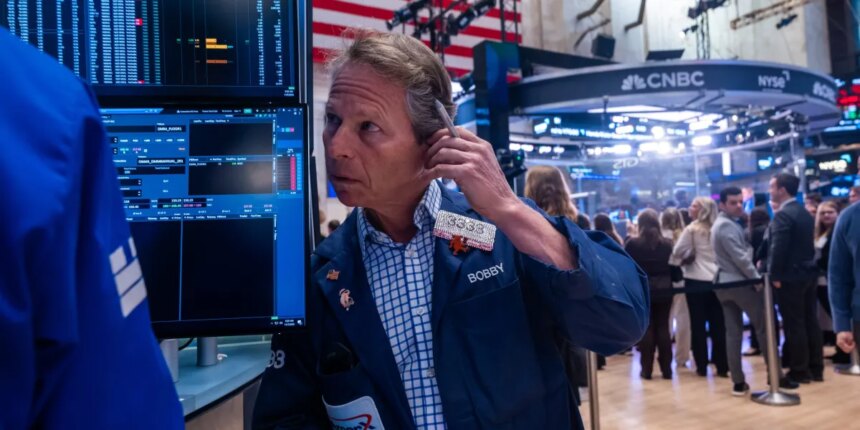
A week characterized by risk aversion on Wall Street is concluding, driven down by significant declines in some of the market’s pricey sectors. Compounded by a renewed drop in cryptocurrency values, the asset class now finds itself barely posting any gains for 2025.
Equity markets experienced downturns on Friday, with the S&P 500 poised to end a three-week streak of gains as US consumer sentiment indicators plummeted to the lowest levels observed in over three years. The Nasdaq 100 faced even steeper losses, primarily due to a significant drop in stocks tied to artificial intelligence. This decline puts the tech-heavy index on course for its most challenging week since April, a time when it had previously stumbled into bear market territory.
Concerns about inflated valuations among high-flying AI stocks have surfaced as their rapid ascent early this year has prompted calls for a market correction. Technical indicators are signaling a need for caution, while mixed messages from Wall Street executives regarding market conditions have also weighed on sentiment.
“Major indices are facing selling pressure this week,” remarked Craig Johnson from Piper Sandler. “Investors should prioritize favorable risk/reward setups, possibly after a healthy pullback within this bull market.”
This week’s declines coincided with the end of the earnings season, leaving investors dependent on private data while a government shutdown limits the release of comprehensive economic data. This situation renders the market susceptible to volatility, as seen in recent sessions where reports indicated troubling conditions in the job market. Although the US payrolls report wasn’t published on Friday due to the shutdown, a survey from 22V Research identified a labor market deterioration as a significant risk to trading, which explains the heightened sensitivity of risk assets and bond yields to any news or data regarding employment.
On Friday, the S&P 500 slipped to approximately 6,670, with the Nasdaq 100 reflecting a 1.1% decline. A measure tracking the top seven mega-cap stocks dropped by 1.8%. Meanwhile, Bitcoin has sustained a notable 9% dip this week, while the yield on 10-year Treasuries remained stable at 4.09%, and the US dollar fell by 0.2%.
“Despite the absence of a jobs report on Friday due to the government shutdown, private payroll and layoff data indicate a cooling labor market,” said Glen Smith from GDS Wealth Management. “Such a cooling trend keeps the Federal Reserve’s plans for rate cuts alive for December, with potential extensions into early 2026.”
Experts remain optimistic about the economy’s upward trajectory, even if growth tends to slow to trend levels in 2026, according to Seema Shah from Principal Asset Management. “The primary concern — and a central topic of debate for the Fed — will be the labor market’s health,” she added. “We expect the Fed to continue implementing rate cuts to stave off any uptick in unemployment. Much of the market’s buoyancy hinges on the presumption that policymakers will sustain some level of economic support.”
Despite the ongoing downturn, cash inflows into US equity funds have reached an eighth consecutive week, marking the longest inflow streak this year, as reported by Bank of America Corp., referencing EPFR Global data.
Traders are reflecting on the implicit weakness amid a multi-month rally in stock prices, yet the overall market seems prepared for additional gains, according to Tony Pasquariello of Goldman Sachs Group Inc. He noted, “I’m not suggesting that the risk/reward scenario is particularly compelling at this stage, nor that this is an ideal time to increase exposure. However, looking ahead, I maintain that the balance of risks still leans towards bullish outcomes.”