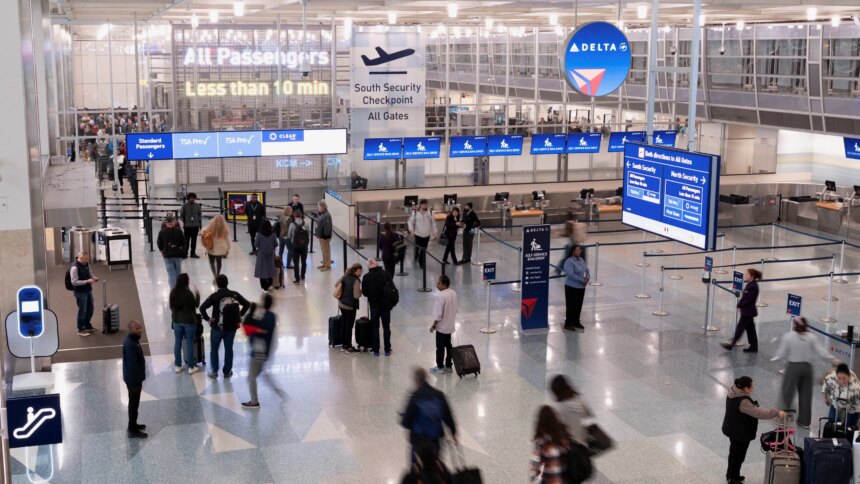
A significant disruption in air travel has occurred as over 1,000 flights were canceled across the United States on November 8. This cancellation wave marks the second day of limited flight capacity imposed by the Federal Aviation Administration (FAA) at 40 major airports amid a government shutdown.
According to FlightAware data, 1,012 flights were canceled for routes “within, into, or out of the United States” as of 2:32 p.m. on that day. While historically winter storms can lead to substantial cancellations, the current disruptions are primarily attributed to the FAA’s mandated capacity reductions. Airlines have reported significant operational challenges due to the order, with some cancellations stemming directly from these limitations.
Leading carriers have publicly acknowledged the impact of the FAA’s restrictions. United Airlines reported canceling at least 168 flights on November 8, while Southwest Airlines confirmed cancellations of just under 100 flights. American Airlines also indicated a reduction in capacity, referring to an earlier statement regarding a 4% cut at the affected airports, which resulted in around 220 daily flight cancellations. Delta Air Lines noted that all flights canceled through November 10 had been completed, although they did not provide specific cancellation numbers.
The FAA’s initial 4% cuts began on November 7, but these reductions are set to escalate. Transportation Secretary Sean Duffy announced that cuts would increase to 6% by November 11, 8% by November 13, and finally 10% by November 14. Duffy also warned that as the prolonged government shutdown continues, there is a possibility the cuts could rise further to 15% or even 20% of all scheduled flights, creating added pressure on air traffic controllers, many of whom are working without pay.
In addition to the cancellations, there were also significant delays, with reports indicating that the absence of air traffic controllers led to hundreds of delays at major airports including Atlanta, San Francisco, Houston, Phoenix, Washington, D.C., and Newark. On a particularly disruptive day Friday, over 5,600 flights were delayed. Earlier declarations from FAA Administrator Bryan Bedford highlighted a troubling trend, noting that between 20% and 40% of air traffic controllers were absent on any given day.
As the situation develops, travelers are urged to stay informed about their flight statuses and any potential changes caused by the ongoing disruptions in air travel.