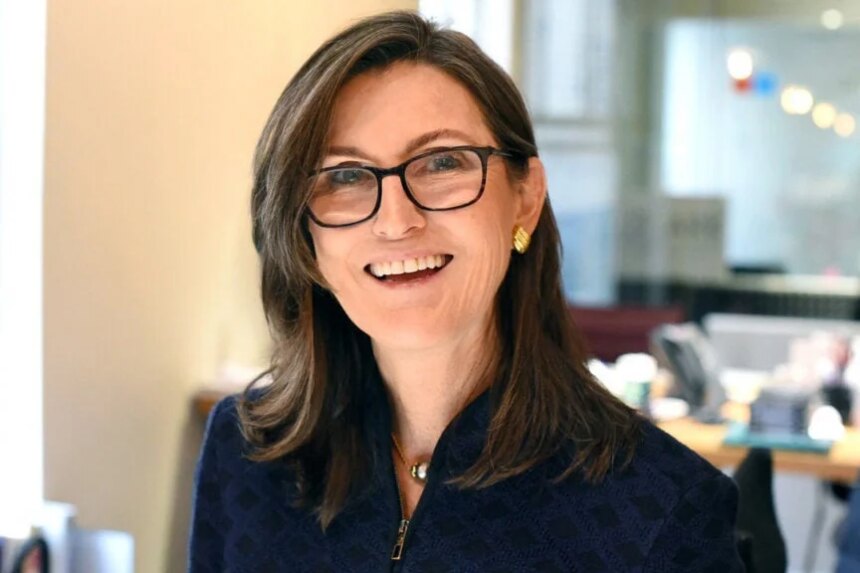
Cathie Wood, CEO of ARK Invest, has expressed unwavering confidence in the future of Bitcoin (CRYPTO: BTC), despite the cryptocurrency’s recent market fluctuations. During a recent podcast appearance, Wood reiterated her ambitious price target of $1 million for Bitcoin, attributing her optimism to the robust growth of stablecoins, which have recently exceeded a market value of $300 billion. She noted that this increase marks a significant moment for the digital asset market, suggesting that while Bitcoin’s price may face short-term challenges, the overall health and credibility of the cryptocurrency ecosystem are strengthening.
Wood articulated that the rise of stablecoins, although it could potentially suppress Bitcoin’s immediate market performance, actually highlights the maturation of the entire sector. She emphasized that these developments are vital for Bitcoin’s long-term growth trajectory and help to cement its status as a leading digital asset. Notably, her $1 million prediction for Bitcoin remains intact, even as the cryptocurrency experienced downturns, dipping below the $100,000 mark for the first time since June 2022.
Driving her outlook on Bitcoin’s future, Wood identified two primary factors: increasing institutional participation and the anticipated stabilization of macroeconomic conditions. She mentioned that improvements are likely around mid-December, especially in light of upcoming Federal Reserve updates and new U.S. employment reports. Wood drew parallels between Bitcoin’s potential ascendance and the historical market performance of gold, suggesting that Bitcoin could eventually capture a significant share of gold’s market capitalization.
While she acknowledged the current pressures facing the digital asset market, Wood remains optimistic that these challenges will eventually subside. She predicts a new phase of growth could emerge in 2026, supported by Bitcoin’s evolving role as “digital gold” with growing institutional backing. Furthermore, she projects that Bitcoin could ascend as high as $650,000 by 2030, with the possibility of reaching up to $1.5 million under favorable market conditions.