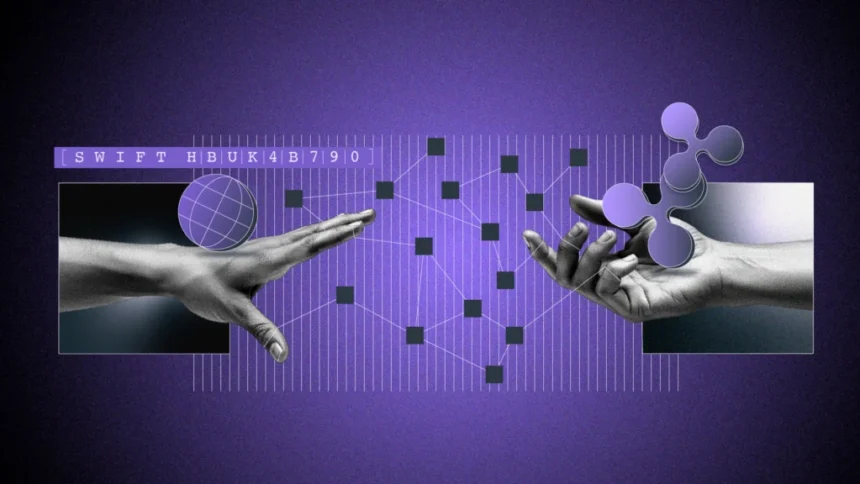
In the evolving landscape of financial communications, the implementation of ISO 20022 stands out as a significant development for institutions seeking to enhance transaction efficiency and interoperability. ISO 20022, established by the International Organization for Standardization, introduces a universal language and structured data model for various financial messaging applications, moving beyond the older SWIFT MT messages with fixed field limitations.
Banks are now prioritizing the adoption of systems that can support ISO 20022 messaging, recognizing that compatibility with this standard involves more than simply settling transactions on a blockchain. It requires a robust infrastructure that preserves financial metadata and adheres to regulatory guidelines. The effectiveness of financial messaging and subsequent workflows relies on this comprehensive integration.
As financial infrastructures transition to ISO 20022, the pressing question is how blockchain technologies and digital assets will interconnect seamlessly with these new protocols. The recent collaboration between SWIFT and Chainlink exemplifies efforts to bridge the gap between traditional financial systems and blockchain capabilities, indicating potential avenues for practical adoption.
SWIFT’s phased migration to ISO 20022, which began on March 20, 2023, marks a pivotal shift in cross-border payments and high-value transfers. Initially, banks can utilize both ISO 20022 and legacy MT formats. However, by November 22, 2025, SWIFT will exclusively require ISO 20022 for cross-border transactions. This transition stages a uniform language for interbank communications, ultimately enhancing payment processing through richer and more detailed messages.
Adopting ISO 20022 goes beyond technological upgrades; it transforms the processing of payments to facilitate reduced manual reconciliation, improved fraud detection, and enhanced compliance measures. Such improvements create a smoother experience for both businesses and consumers by minimizing delays and maximizing clarity in transaction information.
A key point of confusion lies in the term “ISO 20022 compliant” when discussing cryptocurrencies. Unlike a certification program, ISO 20022 encompasses a range of messaging standards without bestowing formal approval on cryptocurrencies. Thus, when projects declare themselves as compliant, it typically indicates either their technical capability to support ISO 20022 messages or their participation in relevant governance bodies, not a formal certification.
Looking at specific cryptocurrencies, Ripple (XRP) has positioned itself strategically by aligning its infrastructure with ISO 20022 to ease banks’ integration processes. Nonetheless, actual adoption hinges on banks’ willingness to utilize Ripple’s services. Similarly, Stellar has demonstrated capability in moving ISO 20022 messages while retaining necessary compliance metadata, indicating potential for institutions wishing to engage with its blockchain.
Another contender, Hedera, focuses on providing a high-throughput, secure environment for financial messaging. While Algorand presents features conducive to ISO 20022 compatibility, it remains in the early stages of adopting formal integrations. Conversely, Cardano’s suspected alignment stems more from community speculation than from confirmed technical compatibility with ISO 20022.
Chainlink has emerged as a crucial player, utilizing its decentralized oracle technology to connect ISO 20022 messaging with blockchain operations. This interoperability is vital for ensuring that institutions can execute standardized instructions simultaneously across multiple platforms, thereby enhancing operational efficiency.
For successful integration within an ISO 20022 ecosystem, it’s essential for blockchain projects to focus on comprehensive support rather than merely claiming compliance. This entails ensuring data integrity, providing clear connections for messaging with banks, and targeting tangible use cases where structured data can drive significant improvements.
As the deadline for the retirement of legacy MT messaging approaches, the urgency for banks and financial systems to adapt and innovate accelerates. The presence of structured communication frameworks heralds a new era in financial transactions, where those projects capable of facilitating this evolution and confirming robust partnerships will stand at the forefront of future developments.