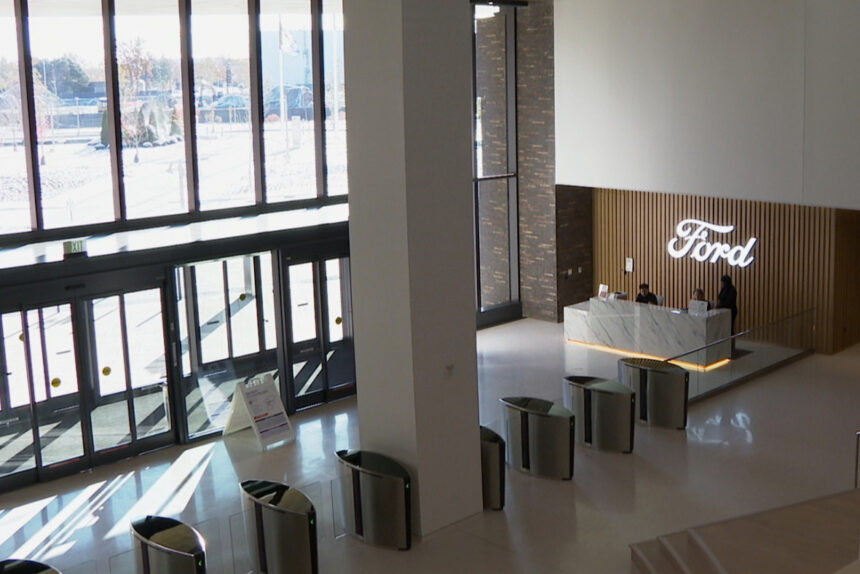
Ford Motor Co. is making a historic leap with its upcoming headquarters, marking the first major relocation since the Eisenhower administration. This move to a newly constructed site just three miles from its long-standing Dearborn home signifies not just a change in scenery but also a bold step into the future of automotive design and technology.
The new facility, dubbed “Ford World Headquarters,” spans an impressive 2.1 million square feet and boasts double the capacity of its predecessor, which was known as “The Glass House.” The state-of-the-art building will feature seven restaurants housed within a sprawling 160,000-square-foot food hall. Additionally, it will include modern office spaces, cutting-edge design studios, and fabrication shops dedicated to innovation in vehicle production.
One of the standout elements of the new headquarters is its gleaming showroom, described by Ford Land’s global design and brand director, Jennifer Kolstad, as akin to a “James Bond villain’s lair.” This showroom will play a crucial role in showcasing new products and facilitating decision-making processes among executives about upcoming market launches. Kolstad emphasized the showroom’s importance, stating, “When you’re in it, you feel like you are in the center of automotive design.”
Anticipated to open fully by 2027, the move will see Ford transition from its iconic headquarters, which opened in 1956 and will soon face demolition. The new site is part of a larger campus that will be named after Henry Ford II, reflecting the company’s lineage while paving the way for a rejuvenated corporate identity.
Experts view this transition as essential for Ford’s aspirations of modernity and competitiveness. Erik Gordon, a professor at the University of Michigan’s Ross School of Business, noted that Ford aims to reshape its image as more than just a traditional car manufacturer, seeking to attract a new generation of employees, particularly in fields like software engineering and artificial intelligence. He remarked, “They want to be viewed as a car company for tomorrow.”
Proximity and collaboration are also key components of the new headquarters’ design. With over 14,000 employees within a short walking distance and another 9,000 nearby, the new setup encourages a culture of teamwork, contrasting sharply with the physical barriers that existed in the old Glass House. Ford CEO Jim Farley has expressed the importance of creating an environment that unequivocally represents the Ford brand, stating, “This building, you know you are walking into Ford Motor Company.”
As the automotive landscape rapidly evolves, Ford’s move comes alongside a similar shift at General Motors, which is also relocating its headquarters. Gordon remarked on this trend, indicating that both companies are striving for a contemporary image that signals their readiness to embrace advancements in technology and innovation.
With the structure of its new headquarters emblematic of its strategic vision, Ford is poised to redefine its corporate narrative, highlighting a commitment to leading in the next era of automotive excellence.