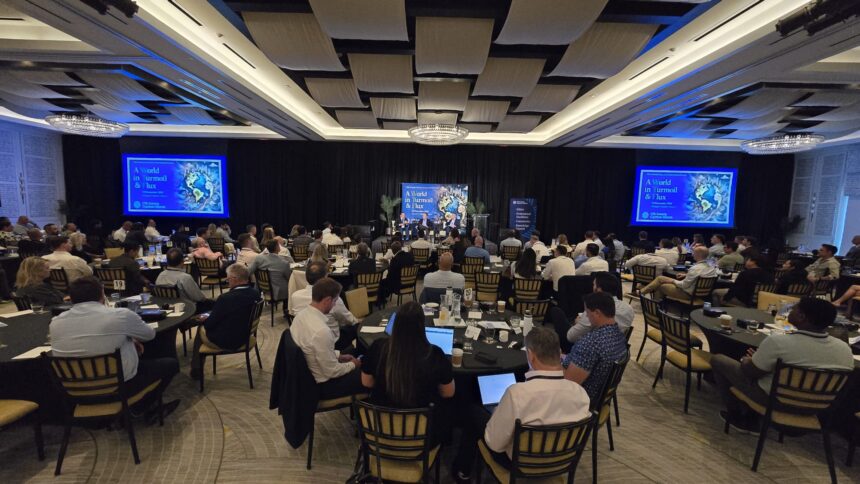
The 11th annual Cayman Investment Forum, hosted by the CFA Society Cayman Islands, took place on November 13 at the Kimpton Seafire Resort + Spa, focusing on transformative themes such as quantum computing, world demographics, and geopolitics, rather than traditional financial topics. The event aimed to provoke thought and discussion around critical issues that could reshape the future.
Simon Cawdery, a director at HLX Management and a member of the CFA Society, emphasized the importance of introducing ideas that might not yet be on everyone’s radar but are expected to influence lives significantly in the coming years.
The forum featured a distinguished roster of speakers, including demographic expert Neil Howe, quantum physicist Shohini Ghose, sociologist and economist Juliet Schor, and geopolitical consultant John Sitilides. Each presenter brought unique insights into the complex challenges and opportunities facing global markets.
Ghose’s presentation on quantum computing provided a startling perspective on its potential impact on blockchain technologies. She highlighted that while current blockchain systems rely on cryptography designed to be secure against classical computers, the advent of sufficiently powerful quantum computers could unravel these securities, allowing for unprecedented hacking possibilities. This could lead to unauthorized transactions and undermine trust in systems that rely on blockchain for security. With the integration of AI accelerating quantum computing development, Ghose warned that these powerful computers might arrive sooner than anticipated.
Howe’s analysis addressed the implications of declining populations, particularly in East Asia, spotlighting South Korea’s challenges. He pointed out that historical patterns suggest that significant population decreases could lead to geopolitical instability, with potential conflicts arising as countries with declining populations face pressures from larger neighbors.
Sitilides ended the forum with a focus on the intensifying competition between the US and China. He projected that this ongoing tension could lead to increased difficulties for globally neutral financial centers like the Cayman Islands, particularly if either superpower perceives the region as aligning with its competitor. He raised concerns about the economic repercussions of a Chinese blockade of Taiwan, likening its potential impact on global GDP to the financial crisis, with even greater ramifications during a full-scale conflict, exceeding those of the COVID-19 pandemic.
Despite these alarming scenarios, Sitilides pointed to a potential silver lining: the US’s efforts to restructure the global refining industry could generate capital investment opportunities exceeding a trillion dollars over the next decade, positioning Cayman as a key player in facilitating this significant financial flow.
In summary, the Cayman Investment Forum served as a critical platform for discussing the intersection of technology, demographics, and geopolitics, urging participants to be proactive in navigating the landscape of future investment challenges and opportunities.