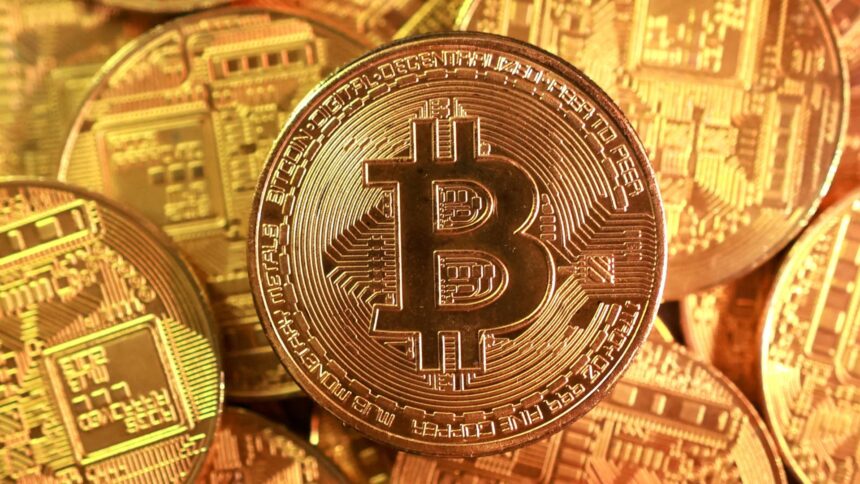
Bitcoin’s recent drop below $100,000 has unsettled the cryptocurrency market, prompting speculation about whether this decline signifies a temporary shakeout or the onset of a more prolonged downturn. Recent trading data revealed that Bitcoin fell below $95,000 on Friday, effectively erasing much of its year-to-date gains. After reaching a staggering all-time high of over $126,000 on October 6, the cryptocurrency has since experienced a nearly 25% decline, raising concerns among investors about a deeper bear market as it currently trades around $95,049.
Industry analysts attribute this downturn to a two-phase process involving an initial sell-off influenced by macroeconomic factors, followed by forced liquidations of leveraged positions. Despite the turmoil, some long-term investors maintain that the core narrative surrounding digital assets remains intact. Many still perceive Bitcoin as a safeguard against inflation and currency devaluation, suggesting its fundamental appeal endures.
The turning point in the market, according to Alessio Quaglini, CEO of Hex Trust, was noted on October 10, following renewed trade tensions between the U.S. and China that led to an immediate sell-off in various risk assets. This sell-off was exacerbated by a “liquidation cascade” that decimated billions in leveraged trades. Quaglini emphasized that this shift represents a liquidity reset rather than a loss of confidence in the asset itself.
The broader cryptocurrency sector is also feeling the strain, with ether—the second most prominent cryptocurrency—witnessing a downturn of over 35% from its August high of $4,954. Though recent easing of tensions between the U.S. and China has occurred, Bitcoin’s market stability remains elusive. Peter Chung, head of research at Presto Research, pointed out that thin liquidity since the mid-October crash, coupled with fears surrounding the end of the four-year cycle, contributes significantly to market volatility.
Compounding the issue are macroeconomic pressures, particularly diminishing hopes for a Federal Reserve interest rate cut in December. The ongoing U.S. government shutdown, which has halted the release of critical economic data, further dampens investor sentiment. Tim Sun, a senior researcher at digital asset financial services firm HashKey, elaborated on how the tightening liquidity has adversely affected Bitcoin ETFs, which previously attracted over $100 billion post-approval. The current climate sees substantial capital outflows from these funds.
As for the immediate future, analysts express skepticism regarding a swift recovery. Quaglini cautions that the correction might not yet be over, suggesting potential for Bitcoin to retrace to the low $70,000 range if equities experience further declines. Jeff Mei, COO at cryptocurrency exchange platform BTSE, concurs, indicating that Bitcoin continues to respond like a conventional risk asset amid scrutiny of AI valuations and persistent uncertainty over interest rates.
Despite the bearish sentiment, market experts emphasize the current reset significantly differs from previous crises. Quaglini reassured that this situation lacks the credit contagion and systemic failures seen in 2022, and anticipated stabilization could set the stage for Bitcoin to eventually reach new highs within the next 12 to 18 months.
For retail investors, Chung advises against trying to time market fluctuations, instead recommending a dollar-cost-averaging strategy. He encourages investors to concentrate on understanding the underlying technologies that power Bitcoin and Ethereum, rather than being swayed by fleeting headlines. Sun further added that long-term purchasers should wait for broad macro signals as indicators for investment rather than relying solely on technical analysis.
Hunter Horsley, CEO of asset management firm Bitwise, sees the current price levels as potentially appealing for strategic investors, branding it a reasonable entry point. He noted an uptick in client investments in cryptocurrency, marking a record number in the company’s seven-year history, suggesting a growing confidence among some investors despite the market’s current struggles.