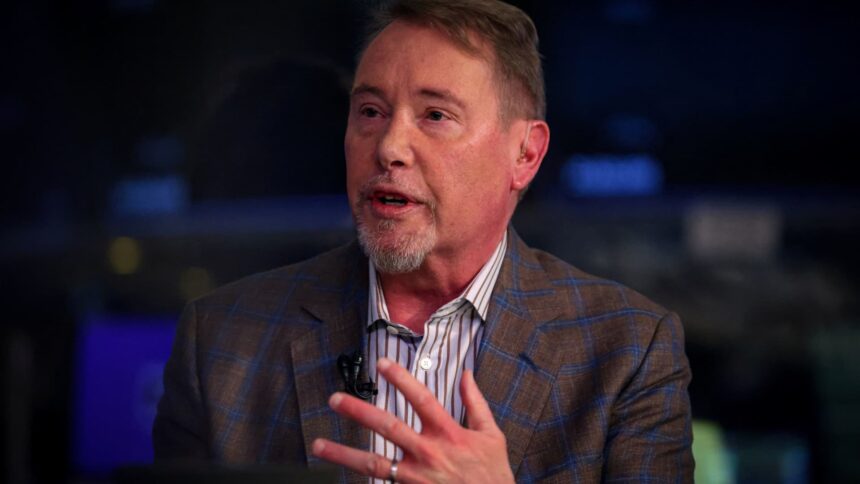
Jeffrey Gundlach, the CEO of DoubleLine Capital LP, recently expressed significant concerns about the current state of financial markets during an interview with Bloomberg’s Odd Lots podcast, highlighting a landscape he considers perilously overpriced. Gundlach, often acknowledged as a veteran on Wall Street, advised investors to hold approximately 20% of their portfolios in cash as a safeguard against potential economic downturns.
Gundlach painted a stark picture of the stock market, which he described as “dangerously speculative”—one of the least healthy environments he has observed throughout his lengthy career. His apprehensions extend particularly to sectors heavily invested in artificial intelligence and data centers, where specific patterns of momentum investing during this economic boom raise alarm bells. He cautioned that such speculative behavior can have dire repercussions for investors.
A focal point of Gundlach’s warnings has been the burgeoning private credit market, currently valued at $1.7 trillion. He criticized the trend of issuing subpar loans, likening them to the conditions preceding the 2008 financial crisis. Recent corporate failures, including auto lender Tricolor and car parts supplier First Brands Group, served as his chosen examples of these risks manifesting in the marketplace. He firmly predicted, “The next big crisis in the financial markets is going to be private credit,” underscoring the alarming similarities to the subprime mortgage issues from years past.
Gundlach also raised concerns about the growing trend of marketing private credit funds to retail investors. He deemed this approach a “perfect mismatch,” pointing out that these funds promise flexible withdrawal options that are often unrealistic given the liquidity challenges of the underlying assets. This could force funds to divest at substantial losses if investors withdraw their money.
While he has detailed his prospects for the market, Gundlach admitted that acting on these insights proves difficult. He refrained from shorting junk bonds despite his bearish outlook, noting that such strategies have consistently underperformed.
Despite the grim market assessment, Gundlach maintains a favorable view of gold as a hedge against inflation. However, he has adjusted his recommended investment allocation to gold from an earlier 25% to 15%. His initial stance was based on the expectation that inflation would remain persistently high due to tariffs affecting import prices, an outlook he still considers relevant although somewhat moderated.
As market conditions continue to evolve, Gundlach’s insights raise crucial considerations for investors navigating a landscape filled with speculative risks and potential pitfalls.