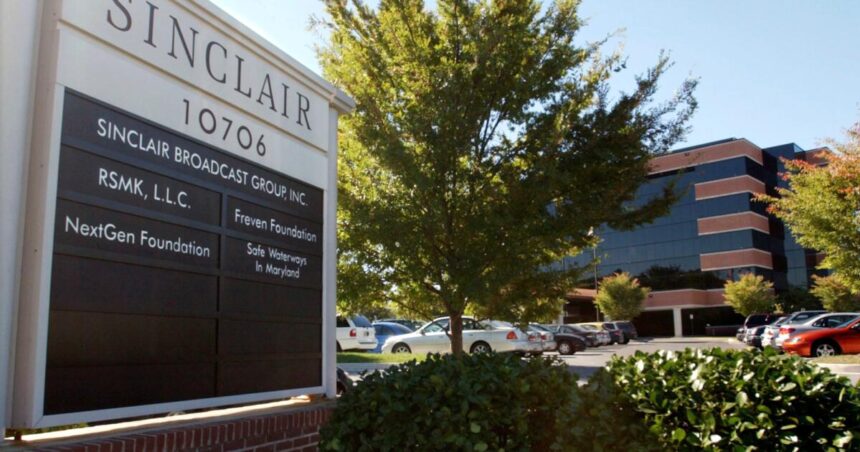
Sinclair Broadcast Group has initiated an unsolicited bid to acquire its competitor, E.W. Scripps, just a week after publicly announcing its stake in the company. Sinclair proposed a purchase price of $7 per share, which includes $2.72 in cash and $4.28 in common stock of the combined entity. This offer represents a significant 200% premium over Scripps’ 30-day average share price as of November 6, drawing attention to the rivalry between the two media companies.
In an official statement filed with the Securities and Exchange Commission, Sinclair made it clear that it is keen on expanding its footprint by acquiring Scripps, a company valued at approximately $393 million and operator of 61 TV stations, including the ION network. Following the announcement, Scripps stated that its board of directors would carefully evaluate Sinclair’s unsolicited offer while considering the best interests of the company, its shareholders, and its employees.
Scripps’ stock price reacted positively to the proposal, rising by around 7.5% to close at $4.43 per share on Monday afternoon. Should the acquisition proceed, it could fundamentally change the landscape of local newsrooms under Scripps. Established in 1878, Scripps has built a legacy around journalistic independence, famously encapsulated in its motto, “Give light.”
Conversely, Sinclair, based in Baltimore, has garnered attention for its conservative editorial stance. The company has faced scrutiny in the past, most notably when it withdrew “Jimmy Kimmel Live!” from its ABC-affiliated stations last September due to comments made by the host regarding a politically motivated crime. Sinclair demanded an apology and a contribution to a right-wing organization, although no concessions were made by Kimmel or ABC.
The proposal comes amid broader industry discussions about regulatory limitations. TV station ownership groups have been advocating for the Federal Communications Commission (FCC) to lift the cap restricting station owners from reaching more than 39% of U.S. households. There are concerns among company executives that this cap places them at a disadvantage against tech giants, which do not face similar constraints. However, consumer advocates warn that increased consolidation could diminish diversity in local media voices.
Sinclair’s bid arrives in the wake of its failed attempt to acquire Tegna Inc., which opted for a $6.2 billion merger with Nexstar Media Group. This merger, pending regulatory approval, would enable Nexstar to cover 80% of the U.S. audience, further altering the media landscape.
TV station owners are hopeful that recent appointments within the FCC could signal a more favorable regulatory environment for consolidation. However, there are indications that political dynamics may complicate this. A recent social media commentary suggested that former President Trump might oppose further consolidation due to concerns over increasing the influence of major broadcast networks, which he has publicly criticized in the past. This complex interplay of interests and regulations will be closely watched as both Sinclair and Scripps navigate this pivotal moment in their respective histories.