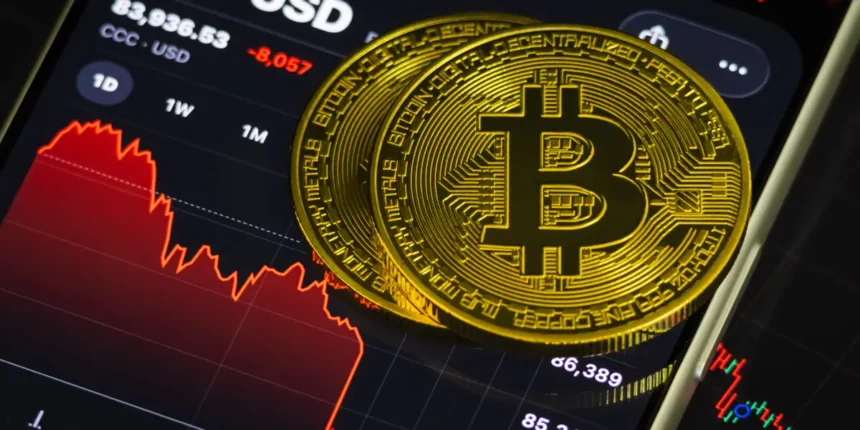
A recent analysis from Deutsche Bank has highlighted that the current decline in Bitcoin prices, which has exceeded 30% from its recent all-time high, is distinct from previous bear markets, presenting unique challenges for recovery. Historically, Bitcoin’s volatility has often been linked to fluctuations in investor confidence related to macroeconomic conditions and market risks. However, the bank points out that the current downturn is characterized by significant institutional involvement and systemic changes in the market.
One of the pivotal factors contributing to this bear market is a noted stagnation in Bitcoin adoption. Recent data shows that the percentage of retail traders engaging with cryptocurrency has dropped from 17% in the summer to 15%. This diminishing engagement is crucial because increased adoption has traditionally been a key driver of Bitcoin’s value. Deutsche Bank analyst Marion Laboure emphasized that the crypto market is currently experiencing the so-called “Tinkerbell effect,” where Bitcoin’s valuations are heavily reliant on belief-driven adoption. During this period, negative sentiment has intensified selling pressure, further driving down prices.
Another factor at play in the market’s current state is the introduction of Bitcoin exchange-traded funds (ETFs), which were approved in January 2024. These ETFs initially sparked a remarkable 600% rally in Bitcoin’s price, marking a new chapter in institutional participation. However, analysts now believe that this same exposure may be creating a feedback loop, where falling liquidity and increased selling pressures are exacerbating the asset’s decline. Deutsche Bank notes that this is the first time Bitcoin has seen a price drop of at least 30% since these ETFs became available.
The combination of thinning liquidity and increased institutional involvement suggests that navigating out of this slump may prove more challenging than in previous corrections. Laboure remarked on the uncertainty of Bitcoin’s stabilization following this downturn, indicating that future recovery will likely unfold in phases, contingent on several factors.
Looking ahead, the report suggests that enhanced regulatory clarity, particularly regarding new crypto market structure reforms, could foster greater institutional confidence in Bitcoin. Additionally, the increasing adoption of stablecoins by major institutions may help to improve overall market liquidity, potentially setting the stage for a recovery in the broader cryptocurrency market.
As the cryptocurrency landscape evolves, the combination of macroeconomic influences and institutional participation will continue to play a critical role in shaping Bitcoin’s trajectory.