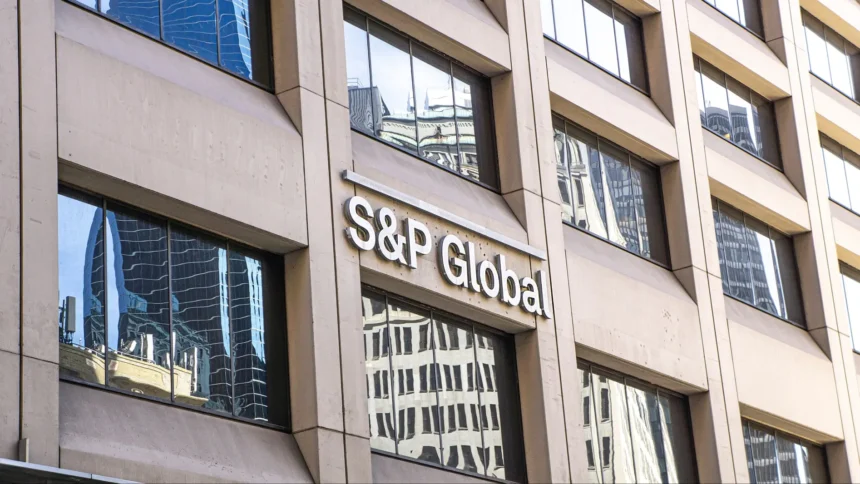
S&P Global Ratings has announced a downgrade of its stability rating for USDT, the world’s leading stablecoin, amid concerns over its increasing exposure to high-risk assets. The rating has slipped from a level of four, denoting “constrained,” to a level five, classified as “weak.” This shift reflects apprehensions regarding the stability of the asset given its current reserve structure.
The organization pointed out that USDT’s reserves, traditionally dominated by cash-equivalent instruments such as Treasury bills, have begun to include a more substantial portion of higher-risk investments, particularly Bitcoin and gold. Over time, Tether has moved away from a purely cash-based reserve model. Initially, the firm actively sought to minimize risk in its reserves, notably eliminating exposure to commercial paper earlier this year and reporting that 81% of USDT was backed by cash and cash-equivalent assets.
However, recent figures indicate a different trend. By the end of September, cash-equivalent investments comprised only 77.23% of Tether’s overall reserves. Tether’s investment strategy now includes significant allocations to secured loans, precious metals, and Bitcoin, impacting the company’s risk profile significantly. In just the third quarter, Tether acquired 26 tonnes of gold and expanded its Bitcoin holdings by nearly 9,849 coins during September and October.
S&P’s Stablecoin Stability Assessment aims to encapsulate the risk associated with each stablecoin and its ability to maintain a value pegged to its underlying currency. The agency’s remarks indicate a growing concern over the adequacy of USDT’s reserves. They note that the current Bitcoin holdings in Tether’s reserves surpass the level needed for adequate overcollateralization. Consequently, any downturn in Bitcoin’s price or similar assets could leave USDT undercollateralized, raising the potential for instability.
Notably, only stablecoins fully backed by low-risk, cash-like assets that match their pegged currency can secure the highest ratings from S&P. However, achieving such a rating is challenging. For example, even though Circle’s stablecoins have been rated based on their superior reserve assets, S&P has refrained from granting an overall “strong” rating due to uncertainties about asset protection in bankruptcy scenarios. At present, none of the stablecoins assessed by S&P has attained the top overall rating.
This downgrade may prompt increased scrutiny of Tether’s investment practices as stakeholders analyze the risks involved in using USDT in the ever-evolving landscape of cryptocurrencies.