The Bangladesh Bank has granted final approval for the merger of five troubled Shariah-based banks into a single institution named “United Islami Bank.” This decision was made during a board meeting held today, marking a significant regulatory milestone that allows the newly unified bank to commence operations.
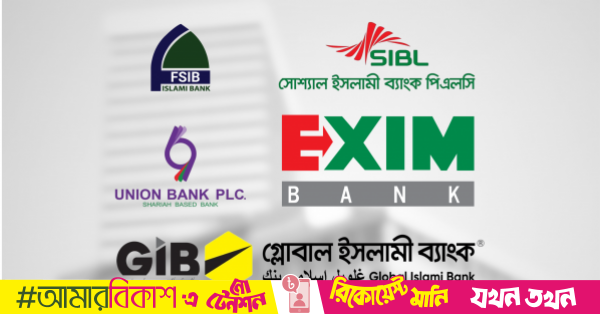
The banks involved in this merger include First Security Islami Bank, Global Islami Bank, Union Bank, Exim Bank, and Social Islami Bank. With this consolidation, the United Islami Bank is set to become the largest state-run Islamic bank in the country.
Earlier this month, on November 9th, the Ministry of Finance issued an initial approval, known as a Letter of Intent (LoI), which facilitated the necessary regulatory procedures. This encompassed obtaining clearance from the Registrar of Joint Stock Companies (RJSC) and setting up the bank’s current account as stipulated by the Bank Company Act.
Following the final approval from the Bangladesh Bank, the merged entity is now poised to begin operations. Central bank officials have indicated that comprehensive guidelines addressing various operational matters—including depositor payments, profit rates, and salary structure—will be released shortly.
In a bid to safeguard small depositors, the bank’s policy will allow ordinary customers to withdraw up to Tk2 lakh during the initial settlement phase, prioritizing their needs.
Earlier this month, on November 5th, the Bangladesh Bank took decisive action to stabilize the situation by assuming control of the five banks. This involved declaring their existing boards defunct and installing five officials from the central bank as administrators. Additionally, the managing directors of these banks were instructed to resign.
The central bank’s preliminary financial outline reveals that the total cost of the merger will amount to Tk35,000 crore. Of this sum, Tk20,000 crore will originate from government funds, which effectively means taxpayers will bear this financial burden. Another Tk10,000 crore will be sourced from the existing deposit insurance fund, contingent upon legal amendments to enable its use as a loan. The remaining Tk5,000 crore is anticipated to be acquired from multilateral lenders, including the International Monetary Fund (IMF), World Bank, and the Asian Development Bank (ADB), as part of broader financial sector reforms.
Despite external funds being involved, these resources will ultimately need to be repaid by taxpayers. To maintain public confidence, small savers will have access to early payouts. Conversely, larger institutional deposits, such as those from corporations and state agencies, will be converted into equity within the newly established bank.