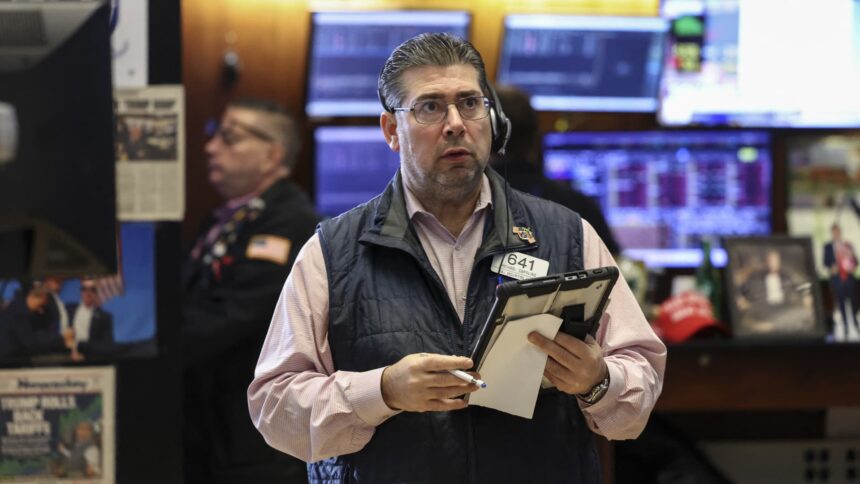
Stock futures remained relatively unchanged on Monday night, reflecting a subdued start to December trading amid emerging concerns in the market. Futures tied to the Dow Jones Industrial Average showed minimal movement, with S&P futures and Nasdaq 100 futures also hovering near the flatline. This week commenced on a low note for major U.S. indexes, snapping a five-day winning streak as risk-off sentiment continued to weigh heavily on investor confidence.
In recent weeks, the market has faced pressure from a trio of prominent concerns: persistent inflation, elevated valuations, and returns on investments in artificial intelligence. These factors have contributed to an uptick in risk aversion among traders. The cryptocurrency market experienced intensified turmoil in the previous session, with Bitcoin suffering a 6% decline, marking its worst day since March. Major crypto-related stocks like Coinbase and Robinhood followed suit, each dropping more than 4%.
In the technology sector, once-dominant stocks that were the talk of November, particularly Alphabet, Google’s parent company, lost ground, falling 1.7%. Other tech giants such as Palantir and Broadcom also experienced declines during this period.
Conversely, gold prices and bond yields experienced upward trends, indicating a shift in some investor preferences. While November turned out to be lackluster for tech stocks, both the S&P 500 and the Dow managed to secure slight gains, leaving many investors on the lookout for potential catalysts that could trigger a year-end rally.
Traders are expressing optimism that the Federal Reserve may announce a long-anticipated interest rate cut during its upcoming policy meeting on December 10. The CME FedWatch tool indicates an 87.6% probability of such a cut, significantly higher than the odds assessed in mid-November.
Mark Hackett, chief market strategist at Nationwide, emphasized that bulls still enjoy a favorable landscape due to various technical and fundamental factors as the year draws to a close. He pointed out that December is typically a robust month for markets, characterized by steady fund flows and improved risk metrics. Driven by a resurgence in the S&P 500 above its 50-day moving average, a noteworthy breadth improvement, and historically weak investor sentiment, conditions appear ripe for potential growth. However, concerns linger regarding the sustainability of AI investments and overall market valuations.
Historically, December has been a strong month for U.S. markets, with the S&P 500 averaging gains exceeding 1% throughout the month since 1950, ranking it as the third-best month for the benchmark index. Investors will be closely monitoring developments in the coming weeks to gauge whether this trend will hold true amid current economic complexities.