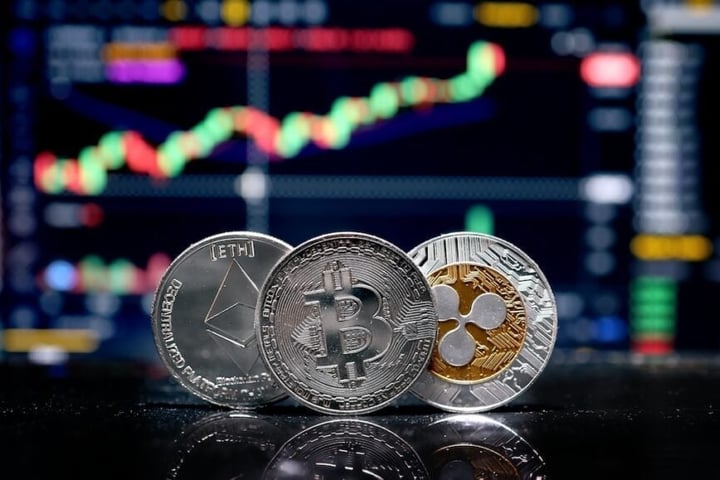
Ripple CEO Brad Garlinghouse expressed optimism about Bitcoin’s future during his speech at Binance Blockchain Week 2025, challenging the current bearish sentiment surrounding the cryptocurrency. He underscored that the prevailing negative mood is a temporary phenomenon and not reflective of the underlying structural support for the crypto market.
Garlinghouse highlighted a significant regulatory shift in the United States as it transitions from a broadly anti-crypto stance to a framework more conducive to digital asset growth. This change, he argued, is crucial for paving the way for increased institutional adoption. Major financial institutions, including BlackRock, Vanguard, and Franklin Templeton, are now beginning to embrace digital assets, signaling a newfound acceptance within the financial sector.
Refuting claims that demand for exchange-traded funds (ETFs) has peaked, Garlinghouse noted that cryptocurrency still constitutes a mere 1–2% of total ETF assets. This small percentage offers vast potential for growth, particularly as institutional interest continues to expand. He mentioned rising institutional flows through Ripple’s prime brokerage services and the burgeoning operations of its stablecoin sector.
Despite recent market corrections that resulted in a loss of approximately $20 billion in leverage and caused traders to seek refuge in stablecoins—a classic indicator of market fear—Garlinghouse remains optimistic. He pointed out that rapid ETF inflows, greater regulatory clarity, and the mainstreaming of stablecoins are indicative of rapidly advancing real-world crypto infrastructure.
The approval of Ripple’s stablecoin initiatives in Abu Dhabi and Dubai further exemplifies this trend, showing that stablecoins are transitioning from being experimental to becoming integrated within established financial systems.
Garlinghouse’s central thesis rests on the belief that short-term market fluctuations should not overshadow the long-term developments taking shape in the sector. He anticipates that as institutional adoption rises, utility expands, and regulatory frameworks improve, Bitcoin could potentially soar to $180,000 by the end of 2026 as market sentiment shifts.
In echoing these sentiments, discussions surrounding effective portfolio management arose, emphasizing the importance of diversification beyond single assets or market trends to mitigate risk and ensure stable returns. This includes exploring alternative investment opportunities, such as real estate and fixed-income assets, which can provide steady income and foster long-term wealth creation.
As the cryptocurrency landscape evolves, investors are increasingly looking at various channels for investment, including platforms that offer low barriers to entry for real estate, interest-bearing bonds, and self-directed retirement accounts, enriching their portfolios with diverse assets. This diversification helps shield against market volatility while potentially enhancing overall returns.