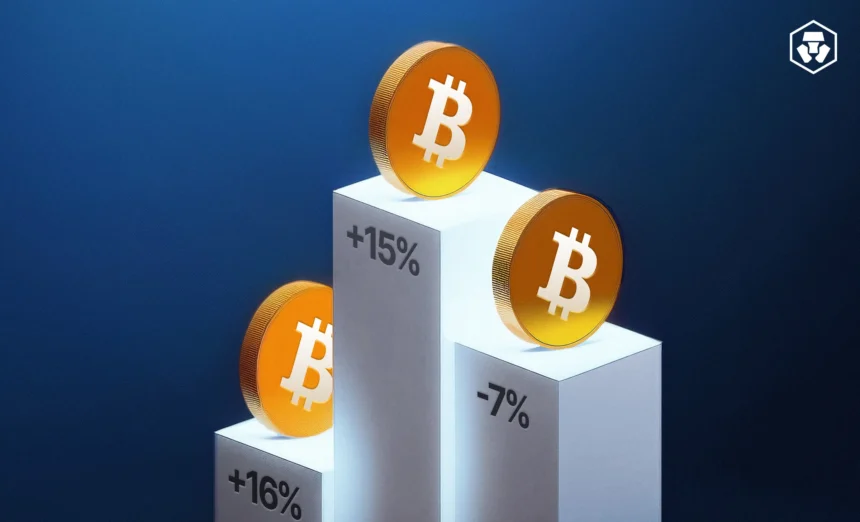
The influence of the US Federal Reserve (Fed) extends beyond traditional financial markets and reaches into the realm of cryptocurrencies. Each time the Fed convenes to adjust its benchmark interest rate, the implications reverberate across various financial systems, impacting investor sentiment and fluctuating asset prices.
Interest rates, particularly the federal funds rate, are pivotal to the economy. This rate represents the interest at which banks lend reserves to one another overnight, effectively influencing borrowing costs across the board—from mortgages to business loans. The Federal Open Market Committee (FOMC) meets regularly to set a target range for this rate. When inflation escalates or when the economy appears to be overheating, the Fed may choose to raise rates. Conversely, in times of economic sluggishness, rate cuts may be instituted to stimulate borrowing and spending.
To implement these targets, the Fed employs several strategies:
- Open Market Operations: Buying or selling government bonds to manipulate liquidity.
- Forward Guidance: Communicating future intentions regarding rates to shape market expectations.
- Quantitative Easing (QE): Acquiring assets to inject cash into the financial system.
- Quantitative Tightening (QT): Reducing its balance sheet to extract liquidity from the economy.
The influence of interest rates extends to cryptocurrency markets, affecting prices through several key mechanisms:
- Valuation of Risky Assets: Higher interest rates diminish the present value of future profits, leading to lower valuations for high-potential assets like cryptocurrencies.
- Liquidity and Credit Availability: Crypto markets thrive in environments where borrowing is inexpensive. Rising rates can dry up liquidity.
- Strength of the US Dollar: Increases in US interest rates can bolster the dollar, making dollar-denominated assets, like Bitcoin, more expensive for global investors while altering capital flows in favor of US assets.
- Opportunity Costs: When traditional yields are low, crypto can appear more attractive. Conversely, higher yields on risk-free investments can lead investors to favor these safer options over cryptocurrencies.
Historical context reveals how the crypto market has reacted during different Fed policy changes. For instance, the onset of the COVID-19 pandemic prompted the Fed to reduce rates to near-zero and escalate QE, resulting in a significant rally in Bitcoin prices—from about $5,000 in March 2020 to around $29,000 by the end of that year. In contrast, aggressive rate hikes and QT in 2022 led to a sharp contraction in the crypto market, with Bitcoin plummeting from $47,000 in March to $16,000 by December.
Currently, as of mid-2023, the Fed’s decision to pause rate hikes has led to some recovery in Bitcoin prices, inching back to $30,000. However, market reactions remain mixed, with some cautious signals limiting a full rebound.
Understanding the Fed’s decisions regarding interest rates is crucial for crypto investors. Typically, when rates are hiked, financial conditions tighten, curbing liquidity and risk appetite, which can drive crypto prices down. Conversely, rate cuts signal easier borrowing conditions, leading to a potential influx of capital into riskier assets like cryptocurrencies.
However, the relationship between Fed actions and crypto reactions isn’t always straightforward. The “priced in” effect often comes into play, where traders adjust their positions based on anticipated Fed moves. This can result in muted reactions following official announcements. Additionally, external factors such as inflation data, geopolitical events, or financial instability can overshadow Fed policies.
Several internal dynamics within the crypto market can also lead to reactions that diverge from macroeconomic expectations. Incidents like exchange collapses or regulatory crackdowns can heavily sway market sentiment, independently of interest rate changes.
Key indicators that traders closely monitor related to Fed meetings include the dot plot, which provides insights into future rate expectations; the Summary of Economic Projections (SEP), detailing forecasts on inflation and growth; real yields, which determine the true cost of capital; and inflation reports that signal tightening or accommodative policies. The strength of the US dollar and the 10-year Treasury yield also serve as barometers for crypto market conditions.
As interest rate announcements approach, the expectations surrounding these decisions can yield varying reactions in cryptocurrency markets. Traders are encouraged to remain vigilant, understanding the nuances of each Fed meeting and the broader economic implications. By staying informed through dedicated platforms, investors can better navigate complex market dynamics influenced by Fed policies.