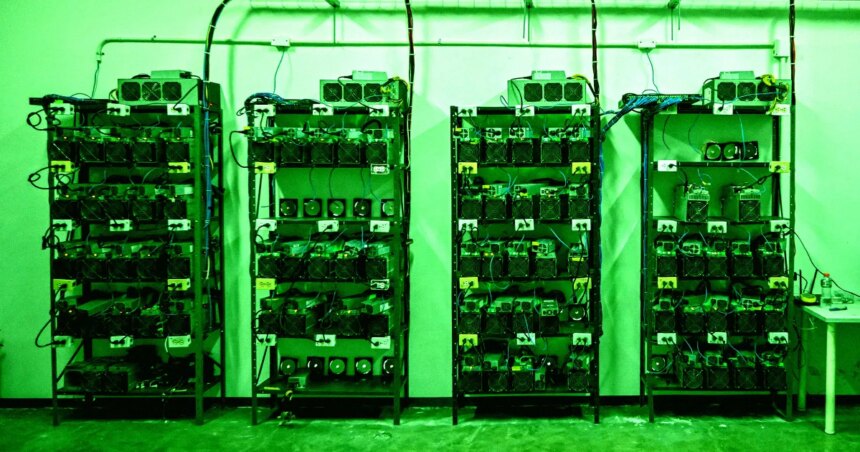
In a striking twist to the traditional landscape of theft, local authorities in Malaysia are confronting an unprecedented surge in illegal Bitcoin mining operations. Currently, law enforcement is tracking down approximately 14,000 such operations, which have reportedly siphoned off around $1.1 billion worth of electricity over the past five years.
This rising trend presents a complex challenge as authorities employ drones and advanced handheld sensors to detect anomalous power usage, engaging in a peculiar game of cat-and-mouse with those who risk stealing electricity for profit. The allure of Bitcoin’s profitability—especially when mined using stolen resources—has drawn many into this underground world.
Recently, Bitcoin prices soared to an all-time high of over $126,000 in October, although they have since experienced significant fluctuations. Despite the volatility, mining operations have remained lucrative enough for many to consider stealing electricity from the national grid as a worthwhile gamble.
The illegal mining activities have not only caused substantial losses for Tenaga Nasional, Malaysia’s state-owned electricity provider, but they also pose potential risks to the country’s power infrastructure. Akmal Nasir, the deputy minister of energy transition and water transformation, highlighted the dangers beyond mere theft, stating, “You can actually even break our facilities. It becomes a challenge to our system.” His comments underscore the urgent need for action, leading to the establishment of a specialized task force dedicated to curbing these illegal operations.
The threat of illegal crypto mining is not unique to Malaysia; it has sparked debates in other countries as well. For instance, power outages in Iran last year intensified discussions around the impact of unauthorized Bitcoin mining, while Kuwait took measures to crack down on crypto mining amid its own power crisis.
Globally, Bitcoin mining consumes an astounding amount of electricity—outpacing the energy consumption of entire countries. The United States stands at the forefront of this industry, responsible for over 75 percent of global mining activities, according to recent studies from the University of Cambridge. In contrast, cryptocurrencies like Ethereum are shifting towards less energy-intensive methods for validating transactions.
In Malaysia, the emergence of illegal mining operations has transformed once-abandoned shopping malls and industrial spaces into makeshift crypto farms. While legitimate miners face the burden of costs related to electricity and taxation, many believe that operating under the radar with stolen energy offers a more appealing option, despite the associated legal risks.
Nasir remarked, “Even if you run it properly, the challenge is that the market itself is very volatile,” indicating that even legal mining endeavours often struggle to succeed in the uncertain crypto environment. He further characterized the illegal operations as reminiscent of organized crime syndicates, noting their systematic and operational sophistication.
This emerging crisis marks a significant intersection of technology, crime, and regulatory challenges, prompting authorities to rethink approaches to both energy management and cryptocurrency regulation.