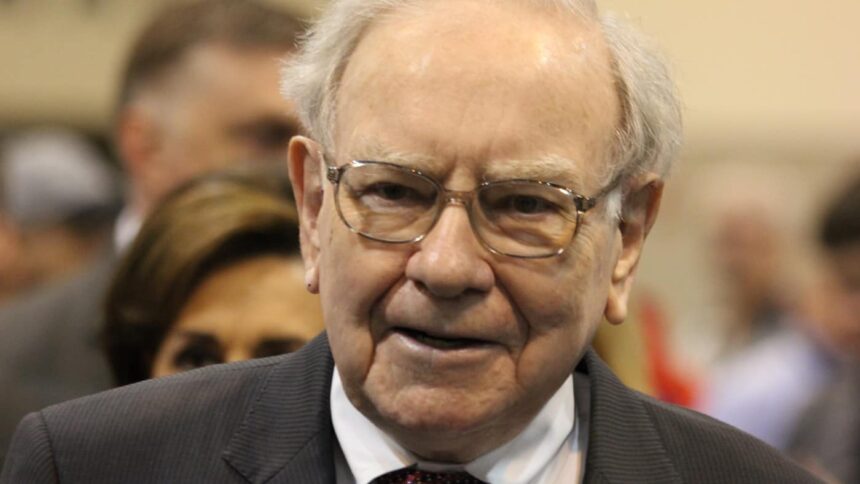
With U.S. stocks at record-high valuations, legendary value investor Warren Buffett has expressed increasing unease about the current market. His investment firm, Berkshire Hathaway, has been a net seller of U.S. stocks for three consecutive years, a trend that reflects the cautious sentiment among top financiers.
While many investors are anxious about a potential AI bubble, Buffett revealed at the recent Berkshire Hathaway annual shareholder meeting that his primary concern lies not with technology, but with what he calls a “ticking time bomb”—the issue of fiscal deficits.
The fiscal deficit problem has escalated for various countries, particularly in the U.S. For the 2024/25 tax year, the U.K. faces an estimated £148.3 billion deficit, but the situation in the U.S. is significantly worse, with a staggering $1.8 trillion deficit. This is not a new development; the U.S. government has operated at a deficit every year since 2002, with the figures escalating over time. Historically, this gap has been filled through borrowing, a strategy that proved effective when interest rates were near zero. However, as borrowing becomes less feasible, the ramifications are becoming more severe, with substantial portions of national budgets now dedicated to servicing interest payments.
The dual challenge of rising interest rates has made it increasingly difficult for the U.S. government to manage its financial obligations. As a result, policy measures such as cutting public spending or raising taxes may be necessary—steps that are often politically unpopular. This precarious situation has led Buffett to state at the shareholder meeting, “Fiscal policy is what scares me in the United States.”
In light of these concerns, Buffett’s ongoing divestment from U.S. stocks becomes more understandable. Yet, there are instances where he has opted to invest, such as in Domino’s Pizza. Despite facing challenges like slowing consumer demand and rising food inflation pressures, Domino’s maintains a technological edge in its operations. The company’s finely-tuned order and delivery system enhances both efficiency and customer experience, allowing it to outpace competitors such as Papa John’s and Pizza Hut.
Although Domino’s must navigate the complexities of an uncertain economic environment, Buffett’s investment in the company signals that there are still opportunities within the market. This optimism amidst economic challenges encourages investors to take a closer look at undervalued stocks, reinforcing the notion that even during turbulent times, there are still avenues for strategic investments.
Inspired by Buffett’s approach, some investors are also exploring undervalued U.S. stocks for their portfolios, reflecting a growing awareness that opportunities exist even in a climate marked by macroeconomic apprehensions.