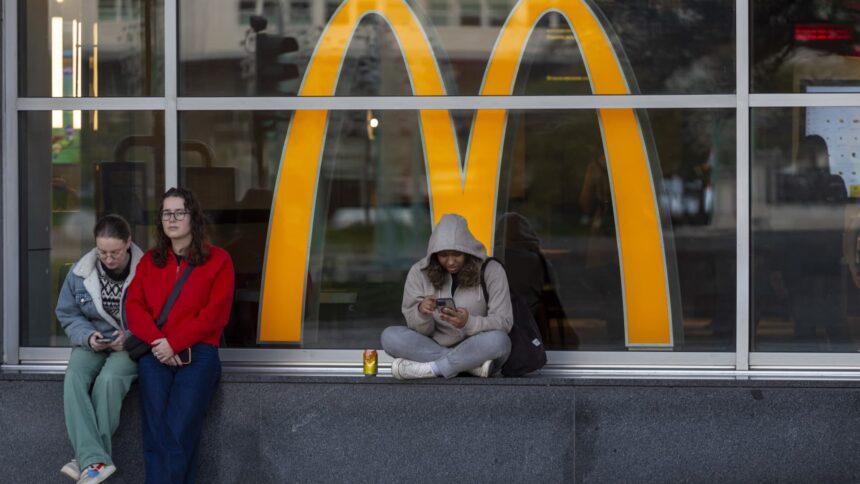
In Lisbon, Portugal, recent developments at McDonald’s have sparked discussions about the fast-food giant’s strategies to retain budget-conscious customers amid economic pressures. On January 12, 2025, patrons were seen congregating outside a McDonald’s outlet as the company prepares to introduce its new McValue Menu alongside other value deals targeted at economically challenged diners. This initiative aims to counteract declining global sales that have been influenced by shifting consumer behavior.
Effective January 1, 2026, the fast-food chain will revise its franchising standards, placing greater emphasis on how franchisees price their menu items to deliver perceived value. Andrew Gregory, McDonald’s senior vice president of global franchising, outlined in an internal memo that these changes are intended to enhance accountability and create a more uniform value experience for customers across all locations. “With enhanced standards, we aim to provide greater clarity to the System to ensure every restaurant delivers consistent, reliable value across the full customer experience,” Gregory explained.
Franchisees operate approximately 95% of McDonald’s restaurants globally and have the discretion to set prices, guided by external pricing consultants. The forthcoming standards will involve a “holistic assessment” of the pricing strategies employed by franchise owners to evaluate their success in delivering value to consumers.
This strategic pivot follows a directive from Joe Erlinger, McDonald’s U.S. President, who urged franchise owners to double down on promoting value offerings. The broader restaurant industry is experiencing a similar trend, with many establishments implementing discount strategies aimed at attracting financially strained customers. However, finding the right balance is crucial, as excessive discounts can adversely affect profitability.
Recently, McDonald’s has observed decreased spending and lower visitation frequency among low-income consumers. To combat this trend, the company has launched value menus not only in the U.S. but also in significant markets such as France and Germany. These initiatives appear to have had a positive impact, with the company successfully reversing declines in same-store sales and even attracting higher-income customers seeking more affordable dining options.
Despite these efforts, McDonald’s CEO Chris Kempczinski remains cautious about future consumer spending, suggesting that economic pressure may continue into 2026. “We continue to remain cautious about the health of the consumer in the U.S. and our top international markets and believe the pressures will continue well into 2026,” he noted during a recent earnings call.
The revised franchising standards, however, may create friction with some U.S. franchisees, particularly those who have previously expressed concerns about the company’s policies. An advocacy group representing McDonald’s operators has called for the corporation to provide financial backing to help sustain discount measures in the long run. Several years ago, a new grading system for franchisees also caused discontent among operators, who felt it could alienate workers amid labor shortages.
In tandem with the overhaul of its franchising standards, McDonald’s is investing in additional resources to assist franchise owners in understanding local market dynamics. Mason Smoot, Chief Restaurant Officer for McDonald’s USA, communicated in a separate memo to U.S. franchisees that while owners will maintain autonomy over pricing, there is now an increased individual accountability for value leadership, supported by approved pricing consultants and other tools designed to enhance the overall customer experience.
As McDonald’s moves to align its operations with contemporary consumer expectations, the company’s commitment to value and collaboration with franchisees will be critical in navigating ongoing economic challenges.