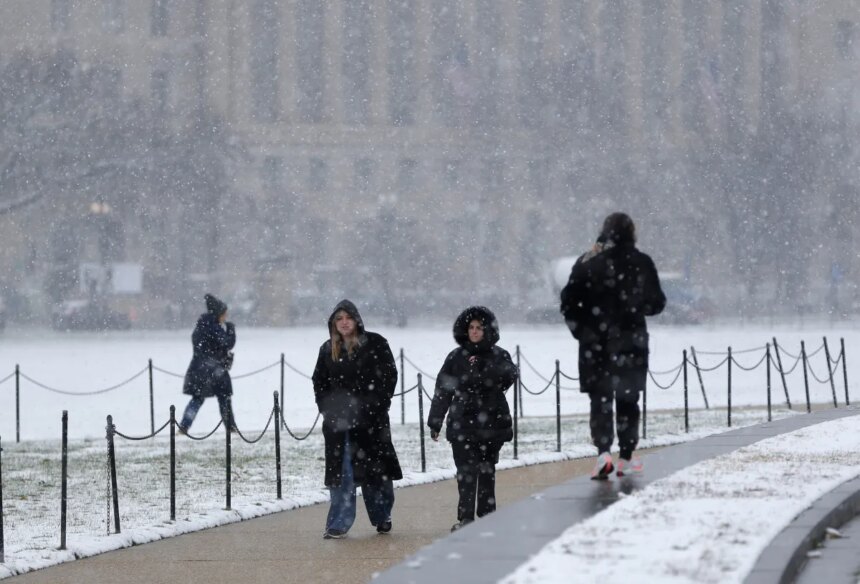
A series of warnings has been issued regarding the potential risks of freezing fog as severe winter weather conditions sweep across various regions of the United States. The National Weather Service (NWS) has alerted residents in multiple cities, including those in Maryland, North Carolina, Washington, D.C., and much of Virginia, about the dangers posed by freezing fog, particularly on Sunday morning.
The occurrence of freezing fog is relatively rare in the U.S. It typically happens when surface temperatures are at or below the freezing mark and can lead to significant hazards such as reduced visibility and the rapid formation of black ice. On Sunday, the NWS cautioned that visibility could drop to “one quarter mile or less,” creating hazardous driving conditions and increasing the likelihood of slick travel due to black ice.
These freezing fog alerts are set to remain in effect until midday and follow previously issued winter storm warnings affecting states in the West and Northwest. The NWS had issued additional warnings early Sunday for states such as Alaska, Colorado, Illinois, Iowa, Wisconsin, and Wyoming, indicating severe conditions with forecasts of several inches of snow, strong winds, and potentially life-threatening circumstances for individuals exposed to the harsh weather.
Travel over the weekend has been severely impacted, with over 4,000 flights delayed and more than 550 cancellations reported as of Sunday morning, according to FlightAware. Approximately 18 million Americans inhabit areas currently under winter weather alerts. Meteorologist Andrew Kozak from CBS News noted that the snowy weather moving from the Northwest to the Midwest would soon be followed by heavy rainfall expected to hit Oregon and Washington late Sunday into Monday.
In anticipation of further weather challenges, the National Water Center issued a warning regarding “considerable flooding” likely around Seattle and parts of Washington in the early to midweek, with limited flooding also expected in portions of Oregon.
In a safety advisory, the Quad Cities office of the NWS, which oversees areas in Iowa, Illinois, and Missouri, posted a message on social media urging travelers to proceed with caution, stating, “The snow and wintry mix is winding down; however, many roads will remain slick and snow-covered this morning. If you are planning to travel, please take it slow and allow for extra time to reach your destination.”
Meteorologist Max Velocity has also weighed in on the situation, suggesting that this winter could take a significant turn, with models indicating a potentially intense Arctic blast on the horizon next weekend. If these predictions hold true, it may lead to some of the coldest temperatures observed since February.
Looking ahead, the NWS released its Day 3-7 Hazards Outlook, projecting heavy snowfall in states such as Michigan, New York, Minnesota, North Dakota, Wyoming, Montana, Idaho, and Washington, alongside heavy precipitation expected in Washington and Oregon. The evolving weather conditions continue to pose challenges for residents and travelers alike.