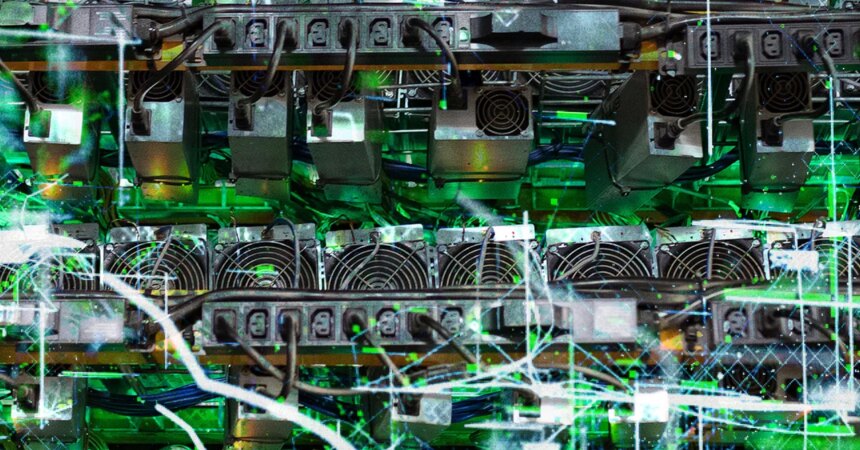
In June 2024, a significant transformation was underway at a major industrial facility a few miles from Corsicana, Texas. Observing from across a metal gate, one could see construction operations in full swing, with bright yellow excavators and active flatbed trucks. This facility, owned by Riot Platforms, was initially intended to be the world’s largest bitcoin mine. However, a year and a half later, plans have shifted dramatically as approximately two-thirds of the operation is now being reconfigured for artificial intelligence (AI) and high-performance computing (HPC) tasks, transitioning from a cryptocurrency haven to what is being dubbed an “AI megafactory.”
This shift is part of a broader trend across the United States, as multiple publicly traded bitcoin mining companies, including Bitfarms, Core Scientific, Riot, IREN, TeraWulf, CleanSpark, Bit Digital, MARA Holdings, and Cipher Mining, have announced pivots toward AI. The increased demand from AI companies for robust data centers capable of accommodating the substantial energy requirements for training machine learning models has driven this transition. Over the past year and a half, large-scale bitcoin mining operations have begun to adapt or entirely transform their business models.
Meltem Demirors, a general partner at Crucible Capital, commented on this development, noting that bitcoin mining has effectively laid the groundwork for the current AI compute boom and established the modern data center. According to Demirors, mining companies have discovered that their capital costs tend to be lower when they align with the AI sector, leading to an efficient repurposing of their facilities—essentially stripping out outdated mining machinery and replacing it with the graphics processing units (GPUs) demanded by AI companies.
This trend is further complicated by the economics of bitcoin mining itself. To secure rewards through transaction processing, mining firms must compete to solve complex computational challenges. The profitability of such operations hinges on several factors, including the prevailing price of bitcoin, the computational power employed, and the energy costs associated with running specialized hardware.
Over recent years, advancements in mining hardware have significantly heightened competition within the bitcoin network. As a result, capturing bitcoin rewards has necessitated increasingly powerful computational resources. Compounding these challenges, the reward for mining a batch of bitcoin has recently been halved, dropping to 3.125 bitcoin as part of its scheduled reduction approximately every four years. Simultaneously, the price of bitcoin has plummeted to around $85,000, marking a 30 percent decline from its peak in 2025.
Industry insiders are expressing concerns about the viability of continuing bitcoin mining amidst these developments. Charles Chong, vice president of strategy at BlockSpaceForce, highlighted the dire economics facing the industry, suggesting that investing in new bitcoin mining equipment poses severe financial uncertainties. The evolving landscape of cryptocurrency mining showcases the industry’s adaptability amid shifting market demands and the burgeoning growth of AI technologies.