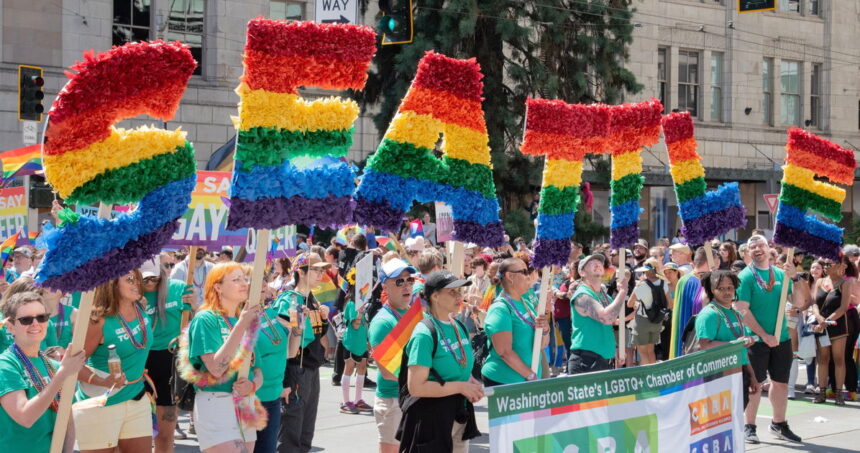
Plans for a historic “Pride Match” at a FIFA World Cup match in Seattle are moving forward despite the significant challenges posed by the anti-LGBTQ laws in the countries competing in the fixture. Set for June 26, coinciding with Pride Weekend, the match at Lumen Field will mark a unique celebration during a global sporting event; however, both teams slated to play, Egypt and Iran, adhere to laws that criminalize homosexuality.
The local organizing committee for World Cup 2026 had envisioned this event as a landmark recognition of LGBTQ pride and inclusivity, with its timing intentionally aligned to commemorate the Stonewall riots’ anniversary on June 28. The initial lineup for the Pride Match was originally assigned to one of two Group G games—either New Zealand vs. Belgium or Egypt vs. Iran. Once the match schedule was finalized, Seattle found itself with the latter matchup, raising ethical questions about celebrating LGBTQ pride under the auspices of two nations that enforce harsh penalties against it.
The situation underscores the complexities faced by organizers. While discussions around the Pride Match are ongoing, the formation of a Pride Match Advisory Committee (PMAC) aims to guide the festivities and associated programming. Their strategy is to foster a celebration that signifies a commitment to inclusivity and welcome, despite the opposing political stances of the participating nations.
Seattle will host six matches during the World Cup, but existing commitments for other games mean alteration of the Pride Match plans is limited. Among these, a match between the U.S. Men’s National Team and Australia has been allocated for Juneteenth celebrations, while additional matches include Egypt or Qatar, nations also noted for their anti-LGBTQ stances.
Despite the difficult circumstances, PMAC representatives have conveyed their determination to promote the Pride Match as a beacon of acceptance. In a statement released to Outsports, a spokesperson emphasized the importance of this match as an opportunity to project a welcoming message to LGBTQ people globally, highlighting soccer’s ability to cross cultural barriers.
Eric Wahl, a member of the PMAC and advocate for LGBTQ rights—along with a relative of the noted soccer journalist Grant Wahl—expressed a hopeful perspective on social media. He suggested that hosting a match between Egypt and Iran as the Pride Match could serve as a testament to the LGBTQ community’s presence everywhere and a call for acceptance.
City officials, too, are eager to harness the World Cup’s potential to elevate Seattle’s reputation as an inclusive city. Incoming Seattle Mayor Katie Wilson shared her excitement on social media, emphasizing that upcoming themed matches allow the city to showcase its commitment to diversity and inclusion.
In preparation for the Pride Match, Seattle’s organizers are collaborating with local LGBTQ+-owned businesses to ensure they capitalize on the influx of visitors anticipated during the tournament. Additionally, three finalists have been chosen in a competition to design artwork representing the Pride Match, curated by local artists and embodying the community’s identity and leadership in LGBTQ rights.
While the PMAC operations are occurring independently of FIFA, the committee explicitly stated that their preparations do not have FIFA’s endorsement. This approach starkly contrasts last year’s World Cup in Qatar, where visible displays of support for LGBTQ rights faced restrictions and even hostility from authorities, highlighting ongoing concerns about human rights practices in association with FIFA events.
As World Cup 2026 approaches, discussions surrounding LGBTQ safety and rights remain pressing, with advocates and organizations continuing to call for action and accountability from FIFA regarding their human rights policies.