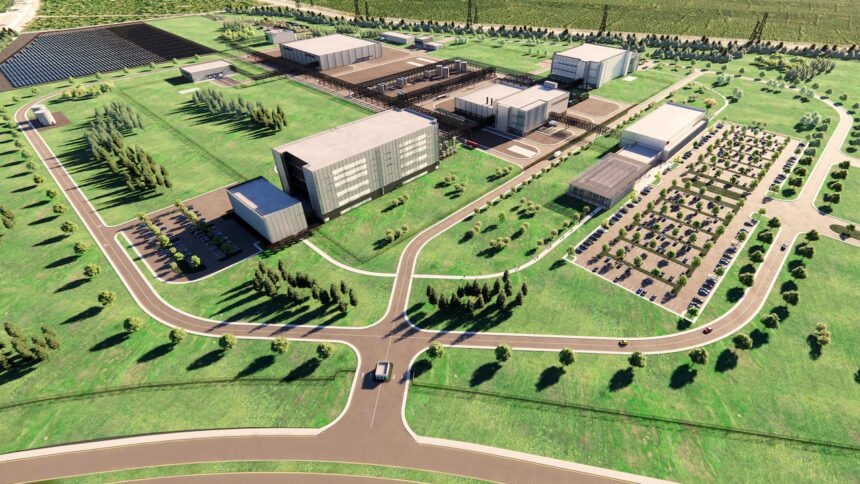
Eli Lilly and Company has announced a substantial investment exceeding $6 billion into a new manufacturing facility set to be built in Huntsville, Alabama. This next-generation synthetic medicine active pharmaceutical ingredient facility will specialize in the production of small molecule synthetic and peptide medicines, marking a significant expansion in Lilly’s U.S. manufacturing capabilities. The Huntsville site will become an integral part of a broader strategy that includes the establishment of another three manufacturing sites across the country.
A notable component of the facility’s operations will involve the production of orforglipron, Lilly’s inaugural oral small molecule GLP-1 receptor agonist, poised for submission to global regulatory bodies for obesity treatment by the year’s end. The investment is expected to generate approximately 450 permanent jobs, spanning roles such as engineers, scientists, operations staff, and lab technicians. Construction is set to begin in 2026, projected to create an additional 3,000 construction jobs, with the facility’s anticipated completion in 2032.
The selected site at Huntsville’s Greenbrier South industrial park was chosen after an extensive evaluation of over 300 potential locations. Its close proximity to the HudsonAlpha Institute for Biotechnology, a prominent bioscience hub known for workforce training and research, significantly influenced the decision. Lilly emphasized that the area also provides advantageous access to utilities, transportation, and supportive zoning regulations.
David A. Ricks, Lilly’s chair and CEO, stated, “Huntsville’s track record of science and innovation, supported by advanced manufacturing expertise and a skilled workforce, makes Alabama an ideal location for Lilly to expand domestic manufacturing capacity for next-generation medicines.” He added that this investment contributes to the ongoing trend of onshoring active pharmaceutical ingredient production, enhancing supply chain resilience and providing reliable drug access for U.S. patients.
Officials in Alabama expect that Lilly’s expansion will greatly benefit the local economy. For each dollar invested by Lilly, it is estimated that up to $4 will circulate in the local economy. Furthermore, the creation of manufacturing jobs is likely to spur additional employment opportunities in supply chain, logistics, and retail sectors.
Governor Kay Ivey, present at the announcement ceremony, highlighted Alabama’s deep roots in the biosciences sector and expressed pride in welcoming Lilly’s facility—the largest initial investment in Alabama’s history. She emphasized the state’s commitment to supporting Lilly’s mission of enhancing health and well-being.
Mayor Tommy Battle of Huntsville expressed excitement at Lilly’s decision, describing it as a significant endorsement of the community’s innovative spirit and resilience. He emphasized Huntsville’s reputation as a hub for technological advancements and its capacity to tackle ambitious challenges.
Lilly plans to incorporate advanced technologies including machine learning, artificial intelligence, and digitally integrated monitoring systems to ensure operational efficiency and high-quality medicine production. Furthermore, the facility will prioritize environmental sustainability, aiming for carbon neutrality while minimizing waste through innovative production processes.
U.S. Senator Katie Britt praised Lilly’s investment as a confirmation of Alabama’s manufacturing excellence and its contribution to a revitalized American manufacturing sector, particularly in the biomedical field. She stressed her commitment to fostering opportunities for the state’s workforce, ensuring that Alabama remains a leader in future manufacturing endeavors.
Earlier this year, Lilly announced additional strategies to expand its domestic production capabilities across various therapeutic areas, with plans revealed to establish new sites in Texas and Virginia, along with an expansion of an existing site in Puerto Rico. A fourth U.S. location is anticipated to be announced in the near future.