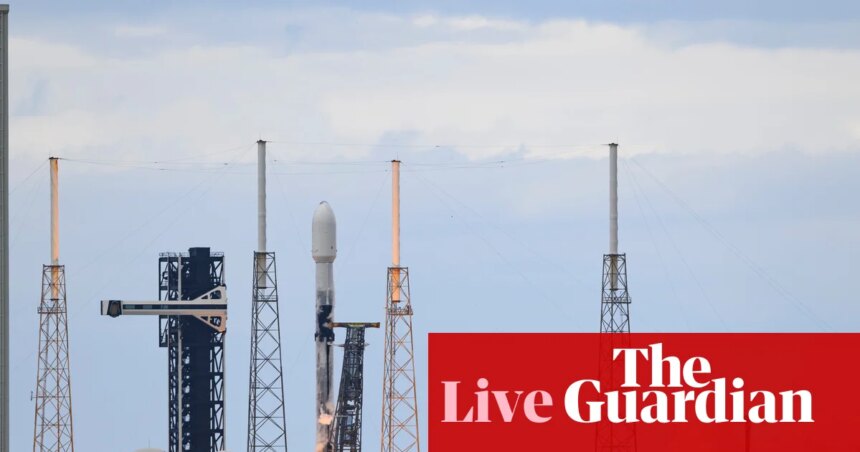
Elon Musk’s SpaceX is reportedly gearing up for a monumental stock market listing next year, with aspirations of attaining a valuation that exceeds $1.5 trillion. As the company, known for its state-of-the-art rockets and reusable launch systems, moves towards selling shares in 2026, it aims to raise significantly more than $30 billion, according to recent reports from Bloomberg and Reuters.
The anticipated share sale would surpass Saudi Aramco’s initial public offering (IPO) in 2019, which raised $29 billion, giving the oil company a valuation of approximately $1.7 trillion. In line with this, SpaceX is also hoping to secure a valuation of over $1 trillion, placing it among the top ten largest publicly listed companies in the United States.
The funds gained from this public offering are expected to be directed toward advancing SpaceX’s ventures, particularly in developing space-based data centers. This initiative, which has caught the interest of both Musk and Google CEO Sundar Pichai, would involve acquiring the necessary chips to operate these centers.
SpaceX is in the process of perfecting its Starship rocket, touted as the most powerful ever built. After a successful test flight that covered half the globe in October, the Starship is designed to transport crew and cargo to destinations such as the moon, Mars, and beyond.
In addition to its ambitious space exploration projects, SpaceX also serves other organizations, including NASA, and operates the rapidly growing Starlink satellite internet service. Concurrently, the company is conducting a secondary share sale, allowing insiders to sell shares to outside investors at a reported valuation of $800 billion. This places SpaceX in close competition with OpenAI, which is reportedly aiming for a $1 trillion IPO in the near future, indicating that the stakes are rising in the market for leading technology firms.
In related news, the economic agenda includes a Treasury Committee hearing on budget matters featuring Chancellor Rachel Reeves, as well as various key announcements from the Bank of England and the US Federal Reserve regarding interest rates and economic performance.