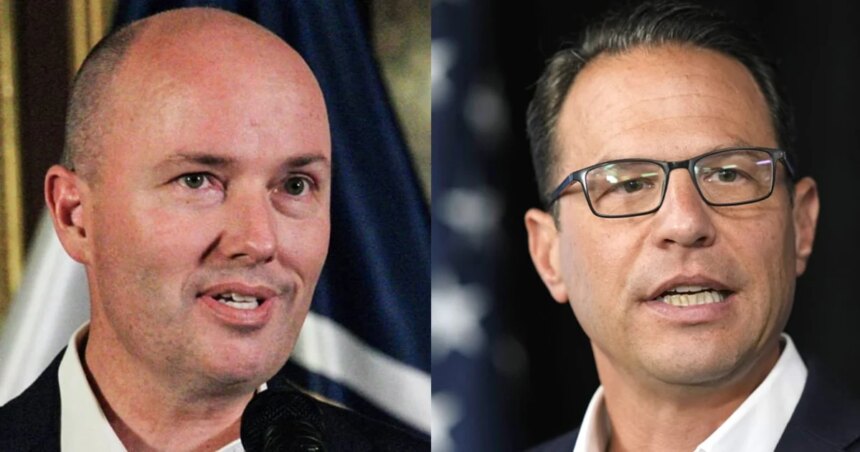
In a candid interview with Savannah Guthrie on “Today,” governors Josh Shapiro of Pennsylvania and Spencer Cox of Utah addressed the state of current political discourse in the United States, particularly in the wake of high-profile incidents of political violence. Their dialogue highlighted the personal connection and mutual respect that has developed between them, despite their differing political affiliations.
Cox, a Republican, garnered significant praise for his actions following the assassination of conservative activist Charlie Kirk in Utah, an event that aggravated existing political divisions. Shapiro, a Democrat, has faced multiple instances of political violence in Pennsylvania, including a recent attempt on former President Donald Trump’s life at a rally and the firebombing of his home. In an emotional reflection, Cox recounted how Shapiro was one of the first to reach out to him following Kirk’s assassination, offering supportive advice that helped shape his public response. “We were two Americans who were deeply saddened and struggling,” Cox remarked, emphasizing the importance of transcending political differences in times of crisis.
Shapiro reciprocated the sentiment, praising Cox’s handling of Kirk’s assassination and stating that it prompted him to speak about political violence with a renewed sense of urgency. He lamented what he described as “selective condemnation” of political violence and highlighted the vital need for a broader national conversation to address these escalating tensions.
The two governors have formed a bipartisan alliance through their collaborative efforts with the National Governors Association. During their discussion, they warned that the current trajectory of political violence might lead to civil unrest. Reports indicate that an overwhelming majority of registered voters believe that extreme political rhetoric contributed to recent violent incidents, reinforcing the need for a cultural shift in how political discourse is conducted.
During their public conversation in Washington, demonstrators interrupted both governors on multiple occasions, a reflection of the contentious atmosphere surrounding political discussions today. Shapiro used the opportunity to condemn violence from both the right and left, criticizing Trump for his inadequacy in denouncing violence when it occurs on the right. He highlighted the collective grief following the loss of individuals like the former Minnesota House Speaker and called for unity in mourning and reflection.
Cox acknowledged the divisive nature of Trump’s rhetoric but stressed that significant change must come from the public rather than solely from political leaders. He cautioned against expecting a president or governor to single-handedly resolve the current divisive climate.
Both governors also explored the role of social media in exacerbating political divides, with Cox pinpointing social media companies as significant culprits profiting from societal discord. He characterized their practices as akin to the behavior of early 2000s opioid manufacturers, designed to be addictive and harmful, particularly to younger audiences.
While Cox expressed robust support for proposed bans on social media accounts for children under 16, Shapiro advocated for a different approach—emphasizing digital literacy and responsible use of technology in schools. He argued that educating young people on how to navigate the internet responsibly is preferable to outright bans.
As their discussion drew to a close, Guthrie asked both governors about potential presidential ambitions for 2028. While Shapiro remains a prominent figure in speculation about Democratic candidates, Cox humorously acknowledged his absence from those conversations, leaving Shapiro’s political aspirations ambiguous.
This dialogue between Shapiro and Cox underscores the necessity of bipartisan cooperation and the urgent need for constructive communication in an increasingly polarized political landscape. Their friendship exemplifies how shared values can transcend party lines in the effort to address the pressing challenges facing the nation.