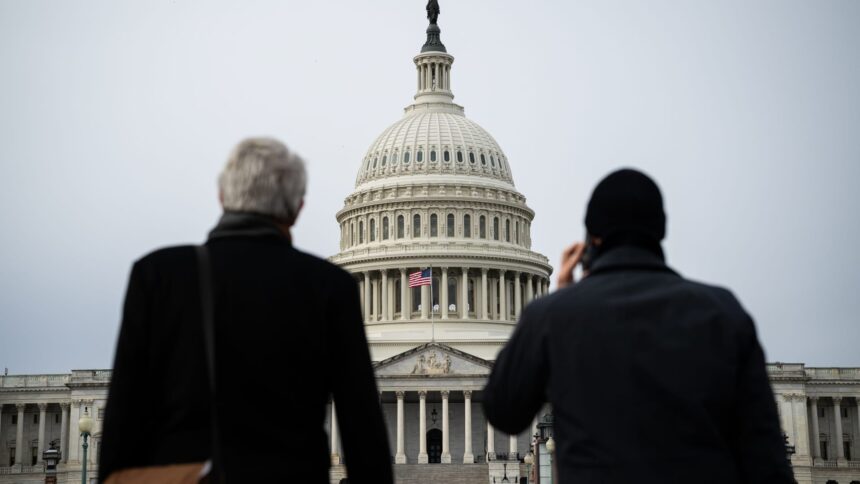
The U.S. Capitol is currently the focal point of intense negotiations as Speaker Mike Johnson gears up to introduce a Republican health-care bill aimed at addressing the ongoing deadlock regarding the extension of Affordable Care Act (ACA) enhanced premium subsidies. With a critical enrollment deadline looming just days away, the situation remains precarious for millions of Americans.
Approximately 22 million individuals benefit from the enhanced subsidies, which significantly reduce their ACA insurance premiums. Without legislative intervention, these subsidies are set to expire at the end of the year, leading to predictions that average premiums could more than double in 2026. This impending cost spike offers consumers a difficult financial landscape, especially for those who rely on the ACA marketplace for health insurance, such as self-employed individuals and freelancers.
As the Dec. 15 deadline approaches for selecting health plans that will take effect in 2026, many households are caught in a challenging position. Some may choose to absorb the increased costs, while others could opt for plans with lower premiums but potentially reduced coverage or may even forgo insurance altogether. Emma Wagner, a senior policy analyst at KFF, highlighted the significant uncertainty that consumers face as they navigate these massive financial decisions.
Efforts to extend the subsidies have been a contentious issue, particularly during the recent and protracted government shutdown. Democratic lawmakers had insisted on this extension as part of their negotiations, while Republicans maintained a hardline stance against discussing subsidies alongside the budget agreement. In a pivotal moment, a faction of Democrats crossed party lines to support a compromise, which, in turn, secured a commitment from Republicans for a Senate vote on a Democrat-sponsored health care bill.
Senate Minority Leader Chuck Schumer announced plans for a vote this week on their proposal to extend the subsidies for three years, although it is widely anticipated that it will fail due to opposition from Republicans. Additional proposals may emerge from moderate Republican lawmakers seeking some extension of the subsidies, albeit with likely restrictions related to household income and the elimination of zero-dollar-premium plans.
According to the Committee for a Responsible Federal Budget, extending the subsidies for just one year would cost around $30 billion in 2026, assuming no financial offsets are provided. If upheld, the current structure of subsidies allows households to receive tax credits that can be applied to lower their monthly premiums. These enhanced subsidies were initially put in place during the COVID-19 pandemic in 2021 and subsequently extended through 2025.
Should Congress fail to act, the subsidy framework will revert to previous standards, which would drastically impact many households, particularly those whose earnings hover just above the federal poverty line. For instance, individuals earning slightly over 400% of this threshold would find themselves losing access to crucial premium tax credits and facing exorbitant full premiums.
Experts predict that the ramifications could lead to approximately 4.8 million additional uninsured individuals in 2026 if the enhanced subsidies lapse. Many enrollees may attempt to mitigate rising costs by selecting lower-cost plans with higher deductibles, increasing risks for both individuals and the broader healthcare system. Younger, healthier individuals may be particularly inclined to drop coverage altogether, which could strain the insurance market further.
Financial planners caution consumers against making impulsive decisions solely based on premium costs. Instead, they advocate evaluating plans with a holistic view of the associated out-of-pocket expenses, including deductibles and co-pays. Awareness of specific plan types—such as HMOs where referrals are needed for specialist care, versus more flexible PPOs—can significantly influence the overall cost of care received.
In light of the current uncertainty, expert recommendations suggest that consumers prepare for the likelihood of increased premiums and approach their selection process armed with realistic expectations. The decisions made in the coming days will shape not only individual financial futures but also the broader landscape of healthcare coverage in the U.S.