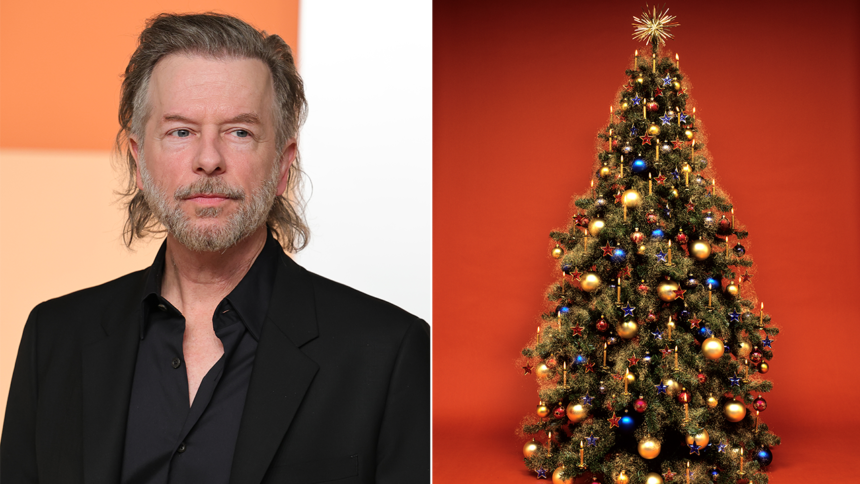
David Spade has voiced his discontent over a recent tree-lighting ceremony at a mall that deliberately omitted the word “Christmas.” During the latest episode of his podcast “Fly on the Wall,” co-hosted with Dana Carvey, Spade lambasted the organizers for what he perceived as a conscious effort to avoid mentioning the holiday, which he believes is suffering from a growing cultural reluctance to celebrate it openly.
Spade recounted his disappointment upon learning that a mall’s tree-lighting event referred to it simply as a “tree-lighting ceremony.” He questioned the rationale behind omitting the traditional term, “Christmas,” asking, “So it’s just a tree? Isn’t it for Christmas?” He expressed bewilderment at what he saw as a trend of sanitizing the holiday of its Christian significance.
Carvey, while sharing Spade’s concerns, emphasized that they both respect people from various religious backgrounds and noted that he had never encountered anyone offended by Christmas traditions, suggesting that non-Christians generally enjoy the festive elements.
Both comedians criticized what they described as a backlash against Christmas, with Spade stating, “I don’t like the anti-Christian feel.” He conveyed that Christianity appears to be criticized or marginalized compared to other faiths and expressed concern over the worldwide persecution faced by Christians, particularly in regions like Africa, where violence against believers has surged.
The conversation drew parallels to recent controversies in Portland, Oregon, where the local government hosted its own tree-lighting ceremony without explicitly labeling the tree as a “Christmas” tree. Residents and commentators took to social media to express outrage, claiming that the city was deliberately sidestepping Christian tradition. Critics argued that such language changes reflect a broader cultural trend that diminishes religious significance in public celebrations.
In defense of the event, the office of Portland’s mayor stated that the tree-lighting was indeed a “Christmas Tree Lighting” and that the criticisms of minimizing the term “Christmas” were exaggerated.
As the discussion continued, both comedians reflected on the evolving secular nature of Christmas in modern America while underscoring the enjoyment that many derive from the season’s festivities, regardless of religious affiliation. They both agreed, albeit for different reasons, that the holiday’s essence should not be diluted or avoided in public discourse.