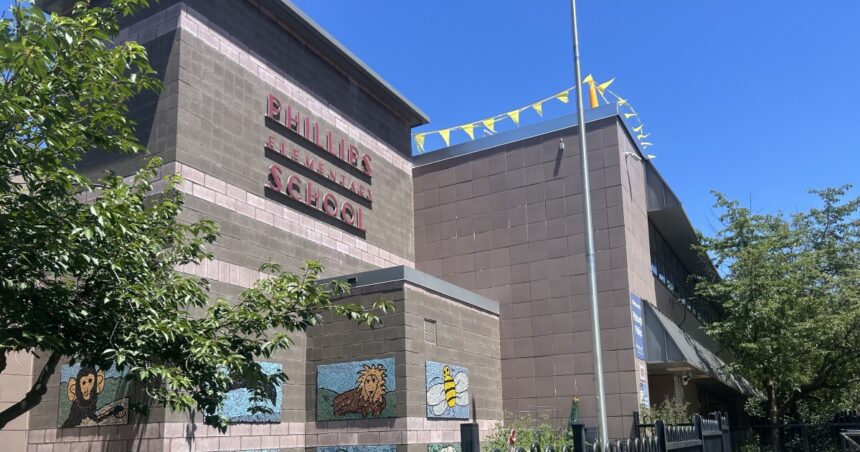
Pittsburgh Public Schools (PPS) is facing significant challenges regarding reading proficiency among its third graders, as recent assessments have revealed a decline in scores. At the end of the 2024-2025 school year, only 44% of third graders in the district were deemed proficient in reading, a noticeable drop from the previous year’s 46%. This trend has raised alarms, especially since reading scores for this demographic have been on a downward trajectory since the 2022-2023 academic year.
During a recent presentation of the Pennsylvania System of School Assessment (PSSA) results, Superintendent Wayne Walters attributed the decline to “inconsistent implementation” of reading instruction across the district. He emphasized the urgency of transforming teaching practices by investing more time in dedicated training for educators. Walters underscored that reading is essential not only in language arts but across all content areas, highlighting the critical nature of comprehension skills.
Despite efforts made in previous years to enhance reading education, including the introduction of literacy coaches in elementary schools, progress has been uneven. Many schools lacked a dedicated reading coach, forcing some coaches to juggle responsibilities across multiple buildings. This has hindered their ability to provide focused support through demonstration teaching and co-teaching.
Assistant Superintendent Shawn McNeil noted that implementation of strategies aimed at improving reading varied significantly between schools. He pointed out that limitations in time allocated for classroom observations and teacher planning were contributing factors to the slow uptake of these practices. Furthermore, he stressed the need for educators to engage more systematically with data analysis, which would allow for timely adjustments to instructional approaches.
Looking forward, PPS is planning to align its methodology with proven practices grounded in the science of reading. Starting in January, all K-3 teachers and principals will be required to participate in a training course focused on this body of research, which emphasizes systematic phonics instruction. The district will also provide a science of reading playbook designed to offer immediate practical guidance for educators.
Additionally, new regulations from the state require all Pennsylvania schools to adopt an evidence-based reading curriculum by 2027. This includes mandatory screening of students in kindergarten through third grade at least three times a year, with supplemental instruction provided for those below grade level.
The urgency of the situation is amplified by statewide statistics, revealing that only 48.6% of third graders across Pennsylvania achieved proficiency or above in reading. In light of this, Walters remarked on the multifaceted challenges—national, state, and local—that are currently impacting reading education.
To further assess its curriculum, PPS commissioned a report from the Reading League to evaluate its recently adopted Open Court Reading program. However, the findings from this evaluation were not discussed in the latest board meeting.
As new board member Tawana Cook Purnell proposed departmentalizing reading instruction by focusing on the district’s best reading teachers, the board echoed the sentiment that prioritizing reading across all subjects is crucial. Purnell, a retired school administrator, emphasized the need to devote more time and resources to reading instruction in the school day.
School Board President Gene Walker articulated the necessity of a clear strategy, particularly in light of upcoming discussions regarding district facilities and potential reconfigurations. After a previous proposal to close nine schools was voted down, Walker expressed a commitment to providing resources to schools struggling with performance to ensure their success.