The ongoing interaction between President Donald Trump’s business interests and his political responsibilities has come under scrutiny as questions around potential conflicts of interest persist. White House Press Secretary Karoline Leavitt recently asserted that neither Trump nor his family ever have, or will, engage in conflicts of interest, despite growing concerns regarding the interplay between his business ventures, particularly in the cryptocurrency space, and his presidency.
Trump’s business empire has significantly ventured into the crypto sector, capitalizing on policies that have encouraged its growth. He has launched memecoins named after himself and his wife, and a firm established with his sons and a top diplomatic aide has introduced a stablecoin and various digital tokens. Notably, a public company tied to Trump’s social media platform is transitioning to operate as a digital asset treasury.
As President, Trump has expressed ambitions to position the U.S. as the “crypto capital of the planet,” and his wealth appears increasingly intertwined with cryptocurrency, raking in hundreds of millions in fees while in office, with projections suggesting he could accumulate billions in total wealth.
Recently, his co-founded firm, World Liberty Financial, started trading a token, WLFI, which allows users to vote on governance matters within the company. This firm is linked to notable figures including Steve Witkoff, Trump’s chief negotiator for Middle East and Ukraine relations. Currently, the Trump family holds the largest stake in WLFI tokens.
Additionally, World Liberty has developed a stablecoin, USD1, aimed at streamlining global financial transactions. Early endorsements have come from an Emirati-backed investment entity. Despite their public office status, Trump and Witkoff are classified as “emeritus” cofounders, with their sons actively promoting the crypto ventures globally—Eric Trump has already made promotional appearances in Asia.
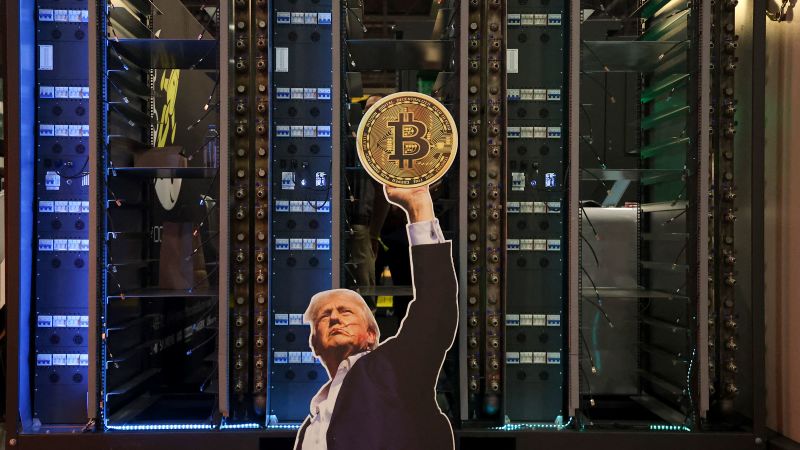
The Trump family’s crypto footprint also extends to various ventures, including a bitcoin mining operation that recently achieved a Nasdaq listing, which reportedly made Eric Trump a billionaire on paper. Trump’s media company, with stock labelled DJT, has amassed a substantial portfolio of bitcoin while planning a shift to function as a digital asset treasury.
Amidst navigating public scrutiny, Trump’s sons have argued against hindering their business pursuits. Donald Trump Jr. articulated a perspective suggesting that since accusations will arise regardless, the family is inclined to continue engaging in their business.
The trading of WLFI tokens has brought considerable attention, though Trump’s family currently cannot trade their accumulated wealth in these assets until the platform becomes operational. Estimates suggest their total on-paper wealth in crypto may surpass $5 billion, while concerns over real estate valuations have resulted in crypto holdings potentially surpassing tangible asset values.
Trump’s media company has seen its stock value decline significantly since the last election, raising ethical concerns about potential profit derived from his policies. Critiques from ethics experts highlight the risk of foreign governments perceiving Trump’s businesses as a means of influence, a situation compounded by the constitutional prohibition against U.S. officials accepting emoluments from foreign actors.
In his ongoing crypto ventures, Trump’s interests are reinforced by substantial foreign investments. Notable figures, such as Justin Sun—a Chinese-born crypto entrepreneur who faced legal issues in the U.S. prior to Trump’s presidency—have invested heavily in Trump-linked memecoins, further complicating the transparency of these transactions.
Currently, Trump is endeavoring to bolster the cryptocurrency framework in the U.S. through initiatives like the creation of a strategic crypto reserve while indicating to investors that significant regulatory hurdles are unlikely during his tenure. Poll data demonstrates a notable rise in American investment in cryptocurrency, with varying opinions on its riskiness between political affiliations.
While the landscape continues to evolve, the intersections of Trump’s business dealings in crypto with his presidential duties remain a contentious topic, raising essential questions about governance, ethics, and political influence in the modern age of digital finance.