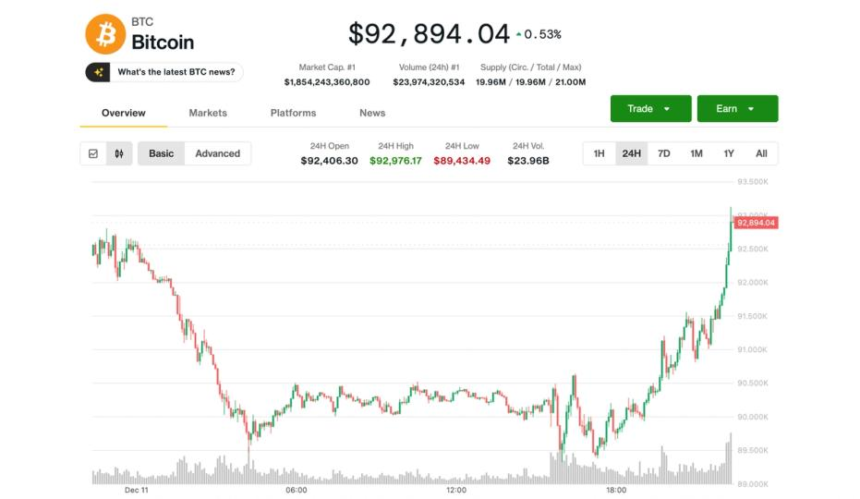
Bitcoin made a notable recovery on Thursday, rebounding to around $93,000 after experiencing a dip to $89,000 following the Federal Reserve’s decision to cut interest rates the previous day. The cryptocurrency’s resurgence occurred amid a broader market context, but it appeared that altcoins were not able to capitalize on this uptick. Notably, Cardano’s ADA and Avalanche’s AVAX suffered significant declines, both slipping by 6% to 7%. At the same time, Ether maintained a position above $3,200, trading at approximately $3,231.71 but reflecting a 3% decline on the day.
The late-day resurgence for Bitcoin coincided with a slight recovery in U.S. stock indexes. The Nasdaq, which had previously dropped by as much as 1.5%, managed to close down just 0.25%. In a more favorable turn, the S&P 500 finished modestly in the green, while the Dow Jones Industrial Average (DJIA) saw a robust gain of 1.3%.
In contrast to the cryptocurrency sector, precious metals witnessed a significant rally, with silver spiking by 5% to reach an all-time high of $64 per ounce. Gold also experienced an increase of over 1%, nearing $4,300. This surge in precious metals was aided by a decline in the U.S. dollar index, which reached its lowest point since mid-October.
Among crypto-related stocks, the exchange Gemini stood out, gaining over 30% following the announcement of regulatory approval to provide prediction markets in the United States, a move that highlights ongoing developments in the regulatory landscape for cryptocurrencies.
However, analysis from Jasper De Maere, a strategist at the trading firm Wintermute, pointed towards a growing divergence between the cryptocurrency market and equities. He noted that only 18% of the past year’s trading sessions had seen Bitcoin outperform the Nasdaq during macroeconomic shifts. He indicated that the latest trading patterns suggested the market had thoroughly priced in the rate cuts, leading to a decoupling where equities rallied while cryptocurrencies experienced selling pressure.
De Maere also expressed concerns about emerging signs of stagflation extending into 2026, suggesting a shifting market focus from Federal Reserve policies toward U.S. crypto regulations as potential key drivers of market dynamics moving forward.
In terms of Bitcoin’s market stability, analytics firm Swissblock provided insights indicating that the downward pressure on Bitcoin is beginning to ease. The firm mentioned that the second wave of selling appears to be weaker than the first, indicating some stabilization, although it stopped short of confirming an outright recovery.