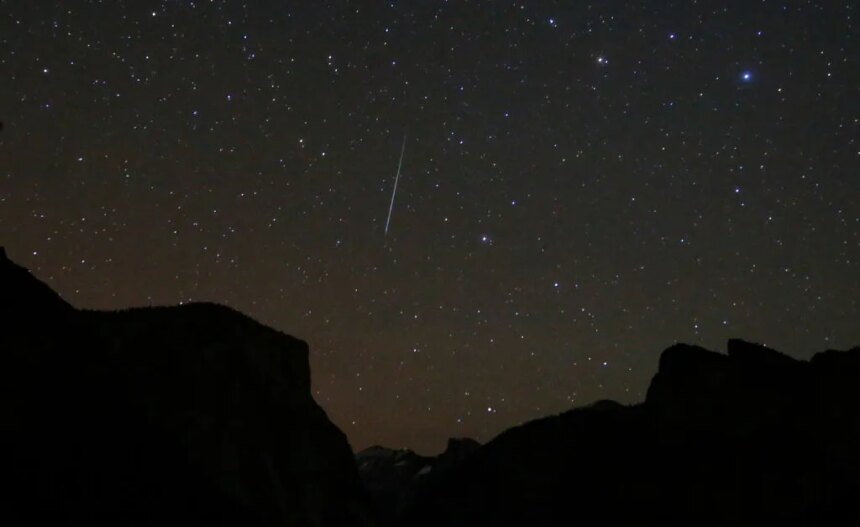
Every year, the Geminids meteor shower captivates stargazers as bright, yellow fireballs streak across the sky. Recognized as one of the most reliable and spectacular annual meteor showers, the Geminids typically begins its display around mid-November and spans approximately a month, culminating in peak activity in mid-December. This year, enthusiasts can anticipate the peak on December 12 and 13, during which ideal viewing conditions may allow for up to 120 meteors per hour, starting as early as 9 p.m. on both nights.
The Geminids are a fascinating phenomenon caused by meteoroids—small fragments of comets and asteroids—that enter Earth’s atmosphere as the planet moves through trails of cosmic debris orbiting the Sun. These meteoroids travel at incredibly high velocities, resulting in dazzling disintegrations that create fiery, colorful streaks across the night sky. Unlike most meteor showers that originate from cometary dust, the Geminids are unique in that they are spawned by an asteroid known as 3200 Phaethon. Discovered in 1983, this small asteroid measures just 3.17 miles in diameter and is named after the Greek mythological figure Phaethon, who famously attempted to drive the Sun-god Helios’ chariot.
Historically, the Geminids first appeared in the mid-1800s when they showcased a relatively modest 10 to 20 meteors per hour. Over the years, however, they have transformed into a more prominent and anticipated celestial event, drawing attention from astronomy enthusiasts and casual observers alike.
For those keen to catch the show, the Geminids meteor shower can be observed globally, provided conditions are right. The best views occur in locations with clear skies and minimal light pollution, away from the hustle and bustle of city lights. To maximize visibility, observers are encouraged to find a spot where they can lie flat on their backs with their feet pointing south, allowing for a broader view of the sky. It typically takes about 30 minutes for the eyes to adjust to the darkness, enhancing the chances of spotting the meteors.
While peak activity is expected around 2 a.m., the shower will continue until dawn, and viewers are advised to exercise patience as they await the spectacular display. Whether a seasoned astronomer or a casual observer, the Geminids meteor shower promises a memorable experience as nature puts on one of its most beautiful shows.