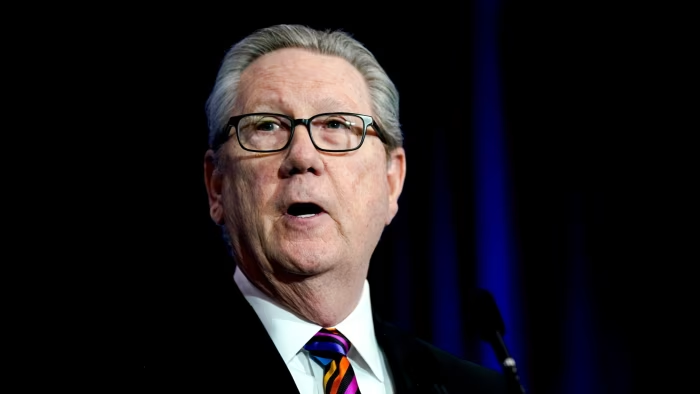
Top officials at the Federal Reserve are emphasizing the importance of vigilance in combating inflation, highlighting concerns that long-term borrowing costs may escalate if the public loses confidence in the central bank’s ability to manage economic stability. Kansas City Fed chief Jeff Schmid, a notable critic of the recent decision to cut interest rates, expressed ongoing worries about inflation in discussions with businesses and households in the western and midwestern United States.
In a Friday morning statement, Schmid reiterated, “Inflation remains too high, the economy shows continued momentum, and the labour market — though cooling — remains largely in balance.” His remarks follow a central bank vote earlier this week that resulted in a reduction of borrowing costs to their lowest level in three years. This decision showcased the divisions within the Fed’s rate-setting committee, with Schmid and Chicago Fed president Austan Goolsbee dissenting against the reduction, advocating instead for maintaining current rates.
Goolsbee echoed Schmid’s concerns, stating, “Given that inflation has been above our target for four and a half years, further progress on it has been stalled for several months, and almost all businesspeople and consumers we have spoken to in the district lately identify prices as a main concern.” Their sentiments were shared by four non-voting members who also expressed preferences for steady rates rather than the quarter-point cut, which adjusted the target range to 3.5 to 3.75 percent.
Fed Governor Stephen Miran, aligned with former President Donald Trump, diverged from the majority view, arguing for a more aggressive half-point cut in line with the president’s advocacy for significant reductions in borrowing costs. Schmid articulated the historical successes of the Fed in mitigating inflation concerns but warned that any resurgence of inflation uncertainty could jeopardize these achievements and lead to increased long-term interest rates, including those affecting US government debt.
Recent data indicates that the personal consumption expenditures price index, the Fed’s preferred measure of inflation, rose at an annual rate of 2.8 percent in September, slightly up from the previous month’s rate of 2.7 percent. The Fed has set a target inflation rate of 2 percent. Goolsbee pointed to former President Trump’s tariffs as contributing factors to the recent uptick in inflation, suggesting that these pressures might be temporary. However, he cautioned against the possibility of persistent inflation, particularly in areas like non-housing services, which could worsen over time.
As debates continue over the appropriate course of action in managing inflation and interest rates, the Fed’s ability to respond effectively without complacency remains a crucial focus for its leaders and the wider economic community.