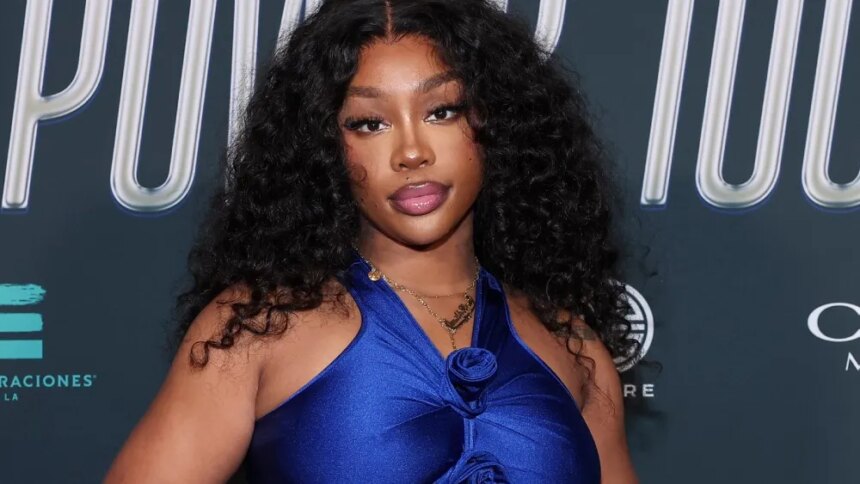
In a recent development, SZA has expressed strong disapproval of the White House’s use of her song “Big Boy” in a social media advertisement supporting the U.S. Immigration and Customs Enforcement (ICE). The artist took to Twitter, labeling the action as “evil” and “boring.” Her reaction came after the White House utilized the song, which initially gained popularity during an SNL sketch aired in December 2022, to promote ICE’s operations, specifically focusing on immigrant arrests.
The White House post included a video of ICE agents making arrests, accompanied by the message: “We heard it’s cuffing szn,” cleverly referencing lyrics from SZA’s song. The post concluded with a statement framing the actions of ICE as beneficial for American communities, stating, “Bad news for criminal illegal aliens. Great news for America.”
SZA’s criticism was echoed by her manager, Punch, who spoke out on X, asserting that the tactic of provoking artists to elicit responses that would further political agendas is “nasty business.” He urged the White House to reconsider such approaches.
In response to SZA’s comments, White House spokeswoman Abigail Jackson acknowledged the backlash, thanking the artist for drawing attention to what she described as the invaluable work of ICE officers in apprehending dangerous individuals from communities across America.
SZA’s condemnation of the White House marks her as part of a growing contingent of musicians who have publicly rejected the appropriation of their work for political messaging. Recently, singer Sabrina Carpenter made headlines for criticizing the previous administration for using her song “Juno” in a montage that depicted ICE raids. She deemed the video “evil and disgusting,” and firmly stated that she did not want her music associated with what she referred to as an inhumane agenda.
Compounding this issue, the White House faced further scrutiny after it deleted its initial post featuring Carpenter’s song. They subsequently uploaded a new clip, which had been modified to alter its context in a manner that many found troubling, showcasing how the administration’s manipulation of content can be perceived as a distortion of artists’ intentions.