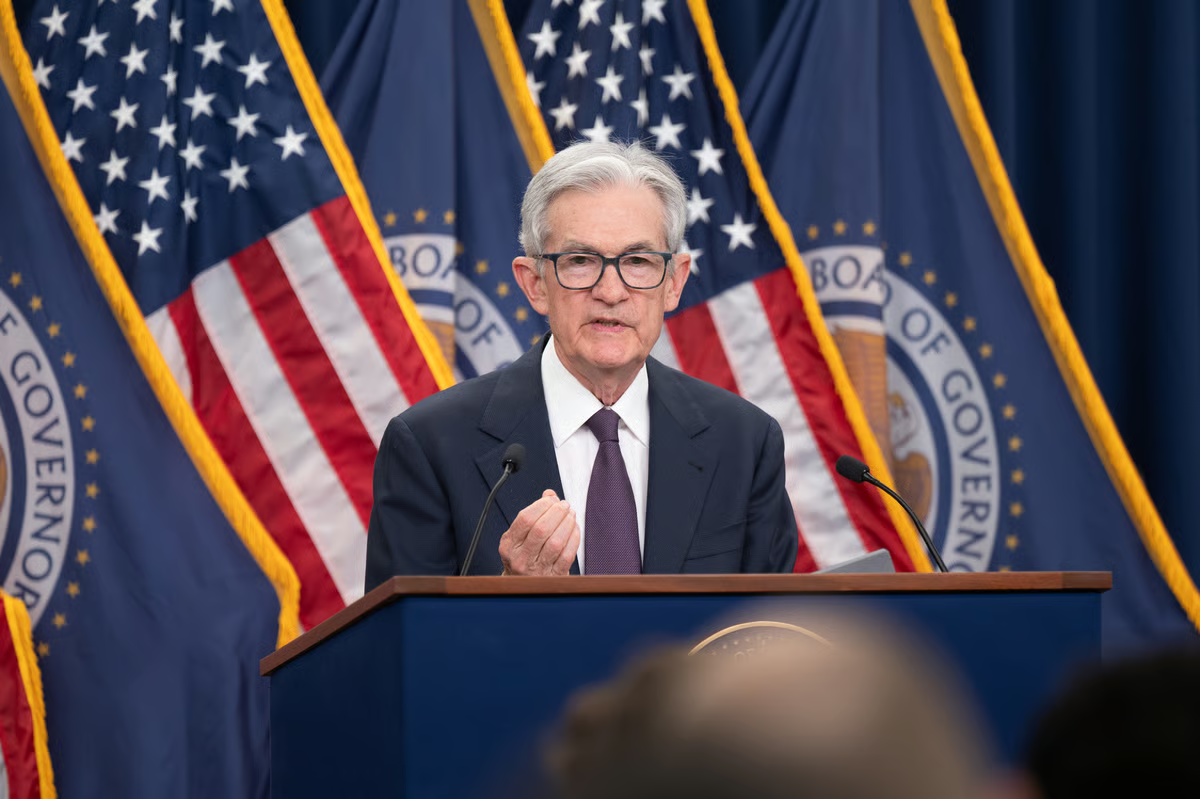
In a move reflecting a more optimistic outlook on the economy, the Federal Reserve has raised its economic growth forecast for 2026, indicating an anticipated increase in gross domestic product (GDP) to 2.3%, up from a previous estimate of 1.8%. This adjustment comes as Wall Street shines with renewed confidence, expecting another robust year for the U.S. stock market.
The S&P 500 index had experienced a dramatic downturn following President Donald Trump’s announcement of severe tariffs in April, dropping significantly before staging a remarkable rebound. Currently, the index has surged 16% year-to-date, but the administration’s trade policies have brought underlying tensions to the economy. With a notable slowdown in hiring and unemployment reaching its highest in four years, concerns about labor market weakness have prompted the Federal Reserve to lower interest rates in its December meeting.
While this rate cut was significant, the more critical development seems to be the raised GDP forecast, which is encouraging for investors. A healthy GDP often correlates with positive stock market performance, and the Federal Reserve’s increased confidence points toward potential for growth in 2026. Historically, rate cuts can stimulate the economy by reducing borrowing costs, yet the aftermath for the S&P 500 has often yielded muted returns, averaging around 3% over the following year — a stark contrast to the long-term average annual return of about 10%.
Currently, the S&P 500 is valued at 22.5 times forward earnings, significantly higher than its five-year average of 20 and its ten-year average of 18.7. This elevated valuation raises some caution among analysts as the market gears up for the next year.
Analysts have issued over 12,600 ratings for various stocks within the S&P 500, and FactSet Research’s bottom-up forecasts suggest that the index could reach 7,968 by December 2026, indicating roughly a 17% upside from its current position of 6,827. This optimistic outlook is supported by projected earnings growth, particularly from the information technology and materials sectors. Earnings for the S&P 500 are forecast to rise by 13.1% in 2025, with an anticipated acceleration to 14.7% in 2026.
Key factors driving this growth include tax reductions on corporate income linked to new deductions for research and development (R&D) spending and equipment purchases. Moreover, advancements in artificial intelligence (AI) are expected to enhance revenue for companies that manufacture AI products, alongside improved operating margins for those that integrate AI technologies.
Despite this positive outlook, risks loom large. Many economists believe that the ongoing trade disputes and tariffs initiated by President Trump could dampen economic growth, although quantifying the damage remains challenging due to the unprecedented nature of these trade policies. The effects of the trade war are already visible, with rising unemployment rates, decreased hiring, and lowered consumer sentiment.
Should these negative trends continue, earnings growth for the S&P 500 could fall short of expectations, potentially triggering a market correction. Given the current elevated valuations, any sign of economic distress, such as slower earnings growth, may prompt significant corrections or lead the market into a bear phase. The coming months will be critical as investors monitor these developments closely, balancing optimism with caution in a rapidly evolving economic landscape.