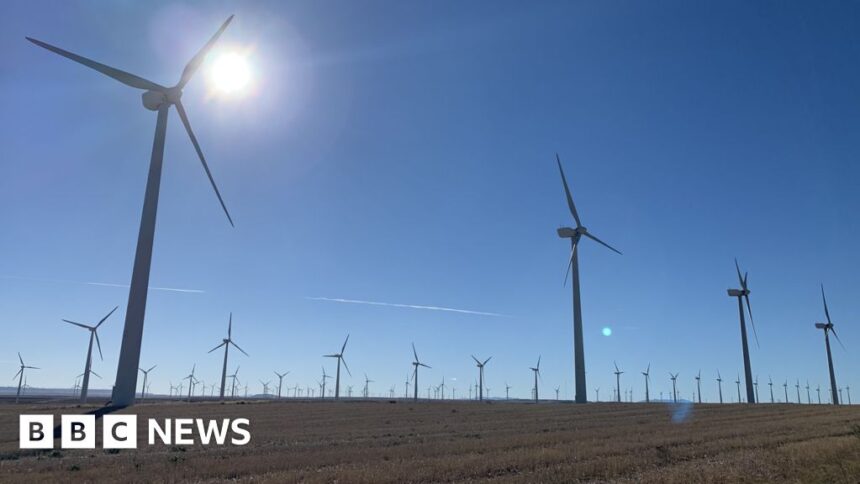
In the quiet town of Figueruelas, located in the Aragón region of north-eastern Spain, a prominent wind turbine serves as a symbol of the country’s renewable energy commitment. This area is known for its extensive investment in wind and solar energy, crucial components of Spain’s electricity generation. Recent developments have further highlighted Figueruelas’ role in Spain’s transition to green energy, as construction begins on a substantial factory intended for electric vehicle battery production.
The €4 billion investment by Chinese manufacturer CATL and the Netherlands-based automotive group Stellantis is set to transform the regional economy. Yao Jing, the Chinese ambassador to Spain, described this project as “one of the biggest Chinese investments Europe has ever seen.” Local officials, including Mayor Luis Bertol Moreno, emphasized the strategic advantage of Figueruelas’ abundant wind and solar energy resources, which are essential for the factory’s future operations.
Spain’s commitment to renewable energy is reflected in significant progress over the past several years. In 2017, renewables accounted for just a third of the country’s electrical output, but recently that figure soared to 57%. The government aims to raise this to 81% by 2030, a goal underscored by Prime Minister Pedro Sánchez’s recent remarks promoting a green future.
However, Spain’s aggressive renewable strategy has faced challenges. A significant blackout on April 28, which left numerous regions in darkness, has fueled debate about the reliability of the energy transition. Critics, including opposition leader Alberto Núñez Feijóo, suggested that the country’s dependence on renewables may have contributed to the outage, demanding a reconsideration of energy policies. Meanwhile, government officials and the national grid operator, Red Eléctrica, have dismissed claims linking the blackout to renewable energy reliance, attributing it instead to an “unknown event” that caused voltage fluctuations. Nevertheless, the search for definitive answers continues.
In the wake of recent events, Spain’s energy mix is undergoing adjustments, with an increased reliance on natural gas, highlighting a pivotal moment in its energy landscape. Moreover, the country’s nuclear sector, which currently contributes about 20% to the energy mix, has firmly opposed the planned closures of its five active nuclear plants by 2035, advocating for the stability that nuclear power offers in contrast to intermittent renewable sources. Proponents argue that maintaining nuclear energy is essential for consistent electricity supply when wind and solar resources are unavailable.
As the political climate surrounding energy issues remains contentious, Spain’s current administration is facing scrutiny amid ongoing corruption scandals that threaten its parliamentary majority and raise the possibility of snap elections. A potential shift to a right-wing government could pivot energy policy away from renewables and towards more conventional energy sources.
For Figueruelas, the immediate outlook appears positive despite the larger uncertainties. The construction of the battery factory is expected to bolster the local economy significantly, with a population boost anticipated as thousands of workers come to support this initiative. Local business owners view this investment as a catalyst for revitalizing the economy, emphasizing the cost-effectiveness of energy derived from natural elements such as sunlight and wind.
As Spain forges ahead in its pursuit of renewable energy, Figueruelas stands as a microcosm of the challenges and opportunities inherent in this transformative journey.