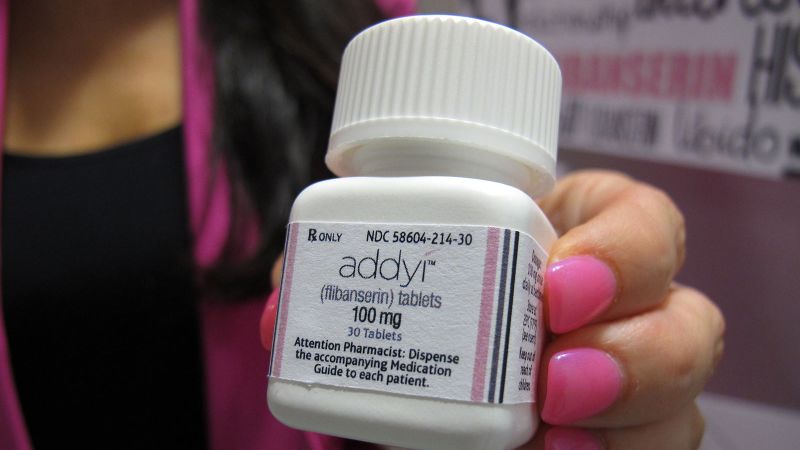
U.S. health officials have officially expanded the approval of Addyi, a controversial medication designed to enhance female libido, allowing its use among women over the age of 65. The announcement from the Food and Drug Administration (FDA) indicates that the daily pill can now be taken by post-menopausal women experiencing low sex drive.
Initially approved a decade ago for premenopausal women experiencing emotional distress linked to low libido, Addyi, produced by Sprout Pharmaceuticals, was anticipated to significantly impact women’s health. However, the drug has been marred by side effects, such as dizziness and nausea, alongside a critical safety warning against alcohol consumption while using the pill. The FDA designates this boxed warning as the most severe, alerting users that mixing the drug with alcohol may result in dangerously low blood pressure and fainting spells.
Despite its initial promise, sales of Addyi have lagged, particularly following the FDA’s 2019 approval of a second treatment for low female libido—an on-demand injection targeting different neurological pathways. Sprout CEO Cindy Eckert expressed optimism regarding the new approval, highlighting a decade of collaboration with the FDA aimed at reshaping the understanding and prioritization of women’s sexual health.
The medical condition known as hypoactive sexual desire disorder (HSDD), which refers to a persistently low sexual appetite, has been acknowledged since the 1990s and is believed to affect a considerable number of American women. Following the success of Viagra for men during that decade, pharmaceutical companies began investing in research for therapies addressing sexual dysfunction in women.
However, diagnosing HSDD is intricate, given the multitude of factors influencing libido, particularly post-menopause when declining hormone levels induce various biological changes. Physicians are tasked with ruling out numerous psychological and relational issues, as well as other medical conditions, before considering medication.
The legitimacy of the diagnosis remains contested, with some psychologists asserting that low sexual desire should not be classified as a medical issue. Addyi itself faced significant hurdles prior to its eventual approval, experiencing two rejections from the FDA due to concerns over its limited effectiveness and side effects. The eventual approval in 2015 followed a robust lobbying effort by the company and supportive organizations that framed the lack of treatment options for female libido as a matter of women’s rights.