Idaho’s health insurance exchange, Your Health Idaho, has officially wrapped up its open enrollment period, and the latest figures reveal a mixed outcome for many residents amidst looming concerns regarding the affordability of health insurance. Overall enrollment in plans offered through the exchange increased by 3% from the previous year, with over 120,000 Idahoans now holding health insurance through the state exchange. However, this uptick in overall participation comes amid significant disenrollment; nearly 8,850 individuals opted to cancel their plans, marking a sharp 24% decrease in new enrollments.
Pat Kelly, Executive Director of Your Health Idaho, highlighted that affordability remains a pivotal concern for residents as they navigate the complexities of health insurance options. “While we’re certainly encouraged by the increase in enrollment, we’re concerned about those that will find the plan they selected unaffordable and cancel coverage,” Kelly noted in a recent interview. He anticipates that an additional 20,000 Idahoans may opt to cancel their coverage in the coming months due to cost-related issues, forecasting that the enrollment landscape will stabilize around April as individuals reassess their financial situations and as insurance companies begin cancelling plans for nonpayment.
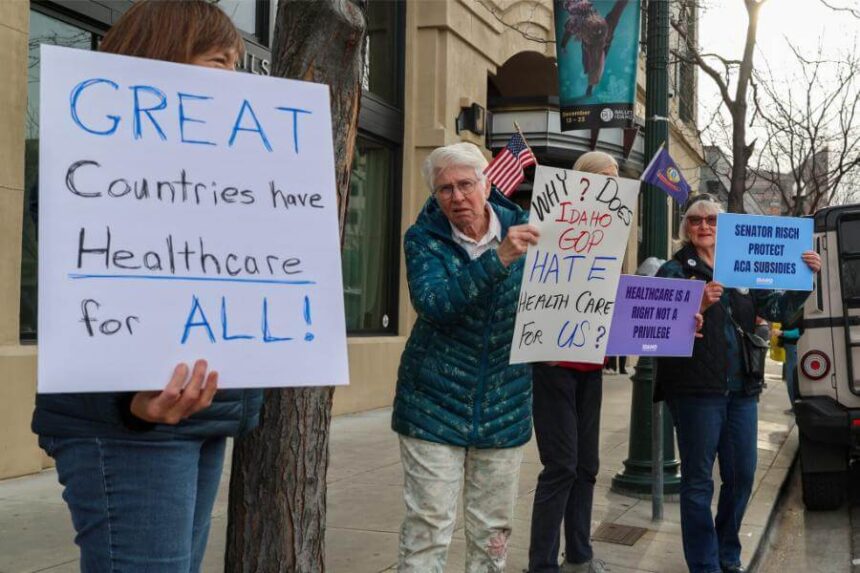
The impending expiration of enhanced premium tax credits, which significantly lower the cost of health insurance premiums for those buying through the Affordable Care Act exchanges, adds to the urgency of this situation. Unless Congress intervenes, these subsidies are set to lapse by the end of the year, with many fearing that Republican leaders’ focus on a different approach to healthcare costs may thwart any attempts to renew these critical financial supports.
Local Democratic leaders have expressed urgency about the potential fallout, citing Idaho as a prospective focal point for a nationwide crisis in healthcare affordability. “Idaho is about to be ground zero for a national health care affordability crisis — not because Idahoans did anything wrong, but because Republicans in Congress refuse to act,” stated Jared Deloof, Chair of the Ada County Democratic Party, during a press conference.
Statistics show that the credits have been a crucial lifeline for many Idahoans, reducing premiums by an average of $407 monthly for those enrolled in plans through the exchange. Approximately 87% of these enrollees benefit from the financial assistance provided by these tax credits, as reported by the federal Centers for Medicare and Medicaid Services.
The impact of losing these credits has already begun to affect families. Single mother Jenn Bazer, who makes $75,000 a year without employer-sponsored insurance, has felt the pinch of rising premiums. A recent raise put her children just out of reach of eligibility for the enhanced tax credits, forcing her to confront a daunting increase in health care costs. “Even if they had been able to stay on, their premium was going to increase $200 a month starting January 1st. So that was unaffordable anyway,” she explained.
Meanwhile, congressional efforts to address this situation have seen pushback. Republican leaders, including Idaho U.S. Senator Mike Crapo, are pursuing alternative measures that do not include extending the enhanced tax credits. Recently, Speaker of the House Mike Johnson indicated that a bipartisan amendment to extend these credits would not be brought to a vote. Instead, the focus is on a GOP health care bill that seeks to tackle rising costs through different mechanisms.
Crapo’s recent legislative proposal, while intended to assist some enrollees through Health Savings Accounts, has faced criticism for not adequately addressing the pressing need for expanded tax credits. Furthermore, both Crapo and Senator Jim Risch opposed a Democratic-backed proposal aimed at extending these critical supports.
As discussions evolve on Capitol Hill, the immediate future for health insurance affordability in Idaho appears precarious, leaving residents uncertain about their coverage and financial obligations in the upcoming year.