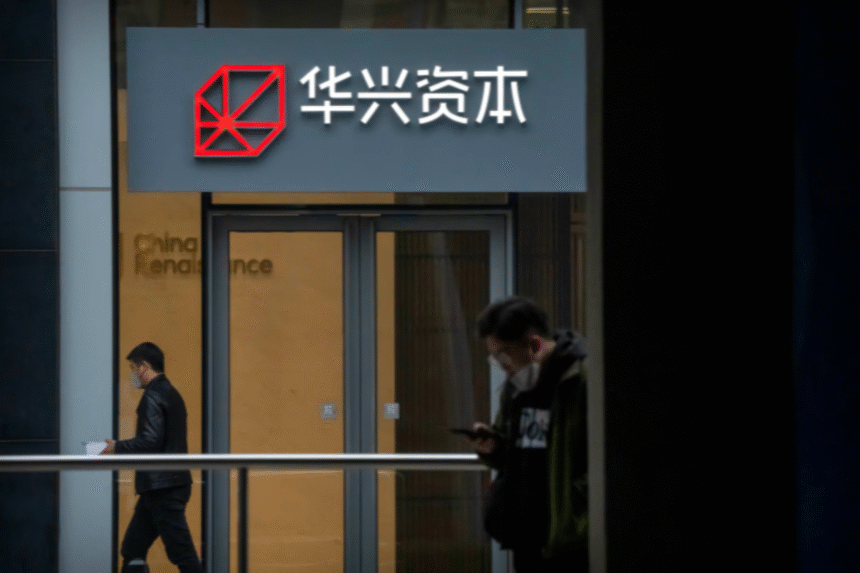
In the summer of 2025, Huaxing Capital garnered significant attention in the financial markets, having signed a memorandum of cooperation with YZi Labs, with plans to invest a remarkable US$100 million in Binance’s platform currency, BNB. This move followed a similar investment made just two months earlier aimed at expanding into Web 3 and the cryptocurrency landscape. Such swift action has stirred speculation among market analysts, leading to discussions about Huaxing’s intentions for a significant transformation within its operational model.
Since its inception in 2005, Huaxing Capital has established itself as a distinct entity within China’s investment banking sector, eschewing the state-owned backing enjoyed by giants like CICC and CITIC, and lacking the prolonged historical legacies of firms like Goldman Sachs and Morgan Stanley. Its growth trajectory has been parallel to the expansive rise of China’s internet, playing pivotal roles in high-profile mergers such as Didi and Kuaidi, and the alliances between Meituan and Dianping. Huaxing’s adept handling of nearly every major industry-defining M&A positioned it as the “M&A King” during the peak years of the internet boom.
However, as the internet economy swayed from a growth phase to a more competitive stock-oriented environment, combined with rising regulatory scrutiny over monopolistic practices, Huaxing began encountering unprecedented survival challenges. What was once fertile ground has become increasingly tenuous, urging the firm to contemplate whether its entry into the realm of Web 3 represents a viable pathway to rejuvenation or merely signifies the fate awaiting traditional investment banks in a digital context.
In 2021, Huaxing Capital posted a near-optimal annual financial performance, achieving a revenue of 2.504 billion yuan with a net profit surge of 56.5% year-on-year. The year saw landmark projects like the Hong Kong IPO of Li Auto and the listing of Kuaishou Technology. However, the subsequent year reflected a stark reversal, with significant declines in both revenue and net profit, attributed to a cooling market environment. Reports indicated a broader downturn in merger and acquisition activity, particularly within the technology, media, and telecom sectors, which heavily impacted Huaxing, yielding what many viewed as a loss of its operational lifeblood.
Furthermore, the crux of Huaxing’s dilemma extends beyond mere financial metrics. The investment company’s model, built upon a dynamic internet growth cycle and guided by the personal charisma of its founder, Bao Fan, now seems outdated. The shift towards transparency and disintermediation within the digital era challenges the traditional frameworks of closed information channels and relationship-driven business strategies. Critics argue that Huaxing’s reliance on a singular key personality model cannot sustain itself in this new environment, which appears to favor institutional structures with decentralized governance.
Huaxing Capital’s foray into Web 3 has roots that trace back several years. Its initial ventures, including participation in Circle’s funding rounds, went largely unnoticed until recent announcements brought them back to light. Despite limited holdings and a relatively small market impact, Huaxing’s investments in the cryptocurrency domain—including direct stakes in Amber Group and Matrixport—illustrate a mosaic of attempts to secure relevance in emerging technologies. However, these initiatives have yet to culminate in significant returns, highlighting the firm’s struggle to adapt to the rapidly evolving crypto landscape.
In a notable leadership transition in 2024, following an extended absence of founder Bao Fan, his wife, Xu Yanqing, assumed control of Huaxing. This shift precipitated the introduction of the “Huaxing 2.0” strategy, emphasizing a pivot away from traditional internet ventures towards hard technology and digital finance. This strategic reorientation coincided with significant regulatory developments, including Hong Kong’s progress on cryptocurrency legislation.
Huaxing’s recent engagements, such as the investment in BNB, suggest an ambitious plan to weave itself into the fabric of the burgeoning Web 3 landscape. The firm envisions leveraging its history of aiding internet companies to replicate that success within the crypto sector. However, the underlying risks associated with such a dramatic pivot cannot be understated.
Traditional investment banking dynamics face unresolved tensions—the unique advantage of personal networks and connections is diminished in a landscape where information flows are fundamentally open. Furthermore, navigating the inherent volatility and narrative-driven short-termism of the crypto market represents a formidable challenge that could potentially jeopardize Huaxing’s hard-earned reputation.
As the firm strategizes its role in this new era, it confronts an urgent question: What intrinsic value can it offer in a decentralized world? Reflecting on its legacy, Huaxing may find itself at a crossroads—caught between a nostalgic allegiance to its roots and the pressing demand for innovation within a transformed financial ecosystem. Transitioning into Web 3 is not simply a strategic choice; it is an adaptation to an environment that has increasingly pushed traditional paradigms towards obsolescence, leaving Huaxing with a crucial challenge of self-reinvention in the face of relentless change.