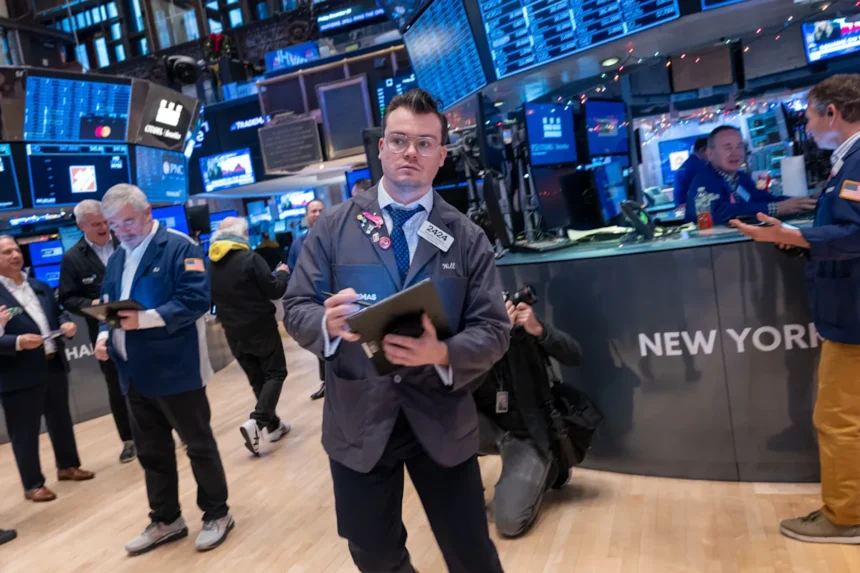
US stocks experienced a notable upswing on Friday, overcoming a recent slump as optimism grew amid signs of cooling inflation and diminishing concerns surrounding artificial intelligence (AI) investments. The S&P 500 rose by 0.8%, the Nasdaq Composite surged over 1.3%, and the Dow Jones Industrial Average saw an increase of 0.3%, all of which followed a strong rally the previous day.
This late-week resurgence contributed to weekly gains for both the S&P 500 and Nasdaq, which climbed 0.1% and 0.4% respectively, during the last full trading week of the year. However, the Dow experienced a slight decline of 0.6% over the same period. Investors are looking forward to a potential “Santa Claus rally” as the year comes to a close.
In technology, Oracle’s stock soared after China’s ByteDance entered agreements to establish a US TikTok joint venture, providing a positive turnaround for the company following a turbulent week. Further bolstering investor confidence in the AI sector, Nvidia experienced a jump in shares, fueled by a report that the US government is reviewing the possibility of resuming sales of its H200 chips to China.
Pharmaceuticals also saw movement as nine companies reached agreements with the Trump administration to lower drug prices for certain consumers in exchange for a three-year waiver on proposed tariffs. This collaboration aims to bring down costs and increase access to medications.
Despite some economic data being delayed, investors retained their hopes for rate cuts in the upcoming year, especially as this week’s reports on job and consumer inflation hinted at a softer inflation landscape intertwined with a weakening job market. The Federal Reserve’s recent easing measures have further stoked this sentiment.
In real-time market dynamics, the benchmark 10-year Treasury yield edged up to 4.15%, reflecting global reactions to the Bank of Japan’s decision to hike its interest rates to the highest level seen in 30 years. Meanwhile, US stock markets confirmed their schedules will proceed as planned for December 24 and 26 despite federal government closures.
Elsewhere, markets marked a rebound as AI-related stocks regained footing. The tech-heavy Nasdaq led with a leap of 1.3%, while the S&P 500 added approximately 0.9% on the strength of investor confidence returning to the AI thematic. Precious metals such as gold and silver traded close to record highs, with gold futures slightly rising to around $4,380 per ounce, bolstered by expectations of potential looser monetary policies going forward.
In the crypto world, Bitcoin remained steady around $87,000 after a week of relative stability, with analysts warning of its potential to remain rangebound in the short term.
Carnival’s CEO remarked on the cruise industry’s resilience, mentioning strong booking rates for 2026, which propelled the stock upwards by more than 8%. Contrarily, Nike shares tumbled almost 10% due to challenges stemming from tariffs and a sluggish market in China, consequently affecting a wider array of footwear stocks.
While home sales showed signs of modest recovery, the overall housing market remains stagnant. Additionally, consumer sentiment ticked upwards this December, though it still fell short of economists’ expectations.
As the trading day progressed, the tech sector demonstrated robust activity, with stocks like Nvidia benefiting from renewed discussions regarding chip exports to China. Market analysts have expressed that historical trends suggest that the stock market may continue to rise as December concludes, further emboldening investor confidence.