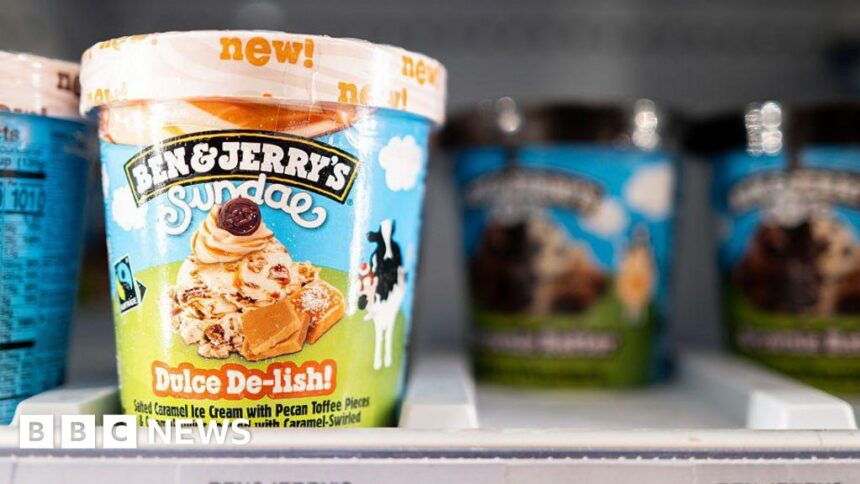
The recent turmoil within Ben & Jerry’s has intensified after Anuradha Mittal, the ousted chair of the brand’s independent board, accused its parent company, Magnum, of threatening her with a public smear campaign. In an interview with the BBC, Mittal revealed that executives from Magnum warned her of potential “defamatory statements” if she did not resign from her position, a claim that adds a dramatic twist to an ongoing dispute regarding the brand’s independence and commitment to its social missions.
Mittal, who led the board for seven years, described this conflict as part of a larger struggle between Ben & Jerry’s traditional values and the interests of its new owners. Earlier this month, Magnum, which was formed after Unilever spun off its ice cream division, cited an internal investigation by external advisors that concluded Mittal was unfit to serve on the board. This decision also affected two other board members who will be required to resign.
The implications of this dispute extend beyond board composition. Magnum’s statement indicated a forthcoming audit of the Ben & Jerry’s Foundation, which uncovered several significant deficiencies related to financial controls and compliance policies. This further fans the flames of controversy surrounding the company’s integrity and governance.
Mittal emphasized that tensions have been escalating as the board has resisted attempts by Magnum to restrict its advocacy for human rights and social justice issues. “For several years now, we have been resisting their overreach,” she stated, reinforcing concerns about the potential loss of the brand’s mission-driven focus. The tension was illustrated vividly in 2021 when Ben & Jerry’s made headlines for its decision to halt sales in Israeli-occupied territories, leading to a contentious situation that ultimately forced Unilever to divest the Israeli operation.
Adding to the drama, Mittal disclosed that Magnum’s officials had offered her a high-profile role in a multimillion-dollar non-profit campaign funded by Unilever as an incentive for her resignation, an offer she deemed “inappropriate.” This aspect of the unfolding saga underscores the complexities intertwining corporate governance with social responsibility.
Magnum, now a giant in the global ice cream market, has stated that it is committed to preserving Ben & Jerry’s founding mission. A spokesperson indicated that recent actions are designed to reinforce the board’s responsibilities while ensuring the brand’s mission remains intact. However, critics, including Ben & Jerry’s co-founder Jerry Greenfield, have voiced concerns that the company’s social mission is increasingly threatened under the new ownership, with Greenfield leaving the firm in September, citing a stifling atmosphere.
The narrative surrounding Ben & Jerry’s is emblematic of broader debates within corporate America regarding the balance between profit and purpose. Despite the upheaval, the brand continues to maintain a bold profile in advocating for various social issues, as evidenced by its active social media presence. As the situation continues to evolve, the implications for the brand’s identity and future are deeply intertwined with the shifting dynamics of corporate governance and social activism.