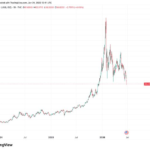
Investors are grappling with whether American Bitcoin represents a promising opportunity or a potential value trap at its current pricing, a sentiment echoed by many in the market. After experiencing a stagnant seven-day return, the stock has plummeted approximately 59.8% over the last month and a staggering 72.2% year-to-date. This significant decline has prompted a reassessment of risk and sentiment surrounding speculative companies, particularly those closely linked to Bitcoin, in light of changing regulatory landscapes and tighter financial conditions.
Despite these challenges, there remains a contingent of risk-tolerant traders who view interest in digital asset infrastructure as an area of potential asymmetric upside. According to recent evaluations, American Bitcoin has scored a 4 out of 6 on valuation checks, indicating areas of possible undervaluation that traditional multiples may not fully encapsulate.
Over the past year, American Bitcoin has delivered stagnant returns of 0.0%, raising questions about its performance in comparison to the broader software industry. A discounted cash flow (DCF) analysis has been employed to assess the company’s value by estimating future cash flows and discounting them back to their present value. Using a two-stage free cash flow to equity approach, which reflects $26.39 million in free cash flow over the past year, projections suggest that American Bitcoin’s cash flow could consistently increase, potentially reaching around $231.60 million by 2035.
When these future cash flows are discounted to current value and divided by the number of shares, the intrinsic value emerges at approximately $2.96 per share. This valuation indicates a potential 39.8% discount compared to the current market price, implying that the stock price does not fully account for the company’s anticipated cash generation and may thus be undervalued.
In addition to DCF analysis, the price-to-earnings (PE) ratio provides another lens through which to gauge value. Currently, American Bitcoin is trading at a PE of around 9.9x, significantly lower than the US software industry average of approximately 32.4x, and below its peer group’s average of about 27.9x. Such a stark difference raises concerns that the market is pricing in higher risk or weaker growth prospects.
Employing a proprietary Fair Ratio, which takes into account company-specific factors like expected earnings growth and risk profile, suggests that American Bitcoin’s current PE does not accurately convey its earnings potential. The indication here is clear: the stock may again be undervalued.
The framework of “Narratives” offers another way to understand valuation. This method links financial metrics to broader business insights, allowing investors to determine growth trajectories, profitability, and risk factors. For American Bitcoin, diverse narratives could yield differing valuations—some might anticipate swift cryptocurrency adoption, while others foresee slower growth. These narratives evolve in real-time as new information emerges, ensuring an up-to-date perspective for investors assessing the stock’s potential.
Investors are encouraged to explore the evolving landscape regarding American Bitcoin and engage with the broader community to assess varied interpretations and predictions about the stock’s future. The analysis included here aims to present a long-term focused evaluation driven by fundamental data, without constituting financial advice or recommendations for stock transactions.