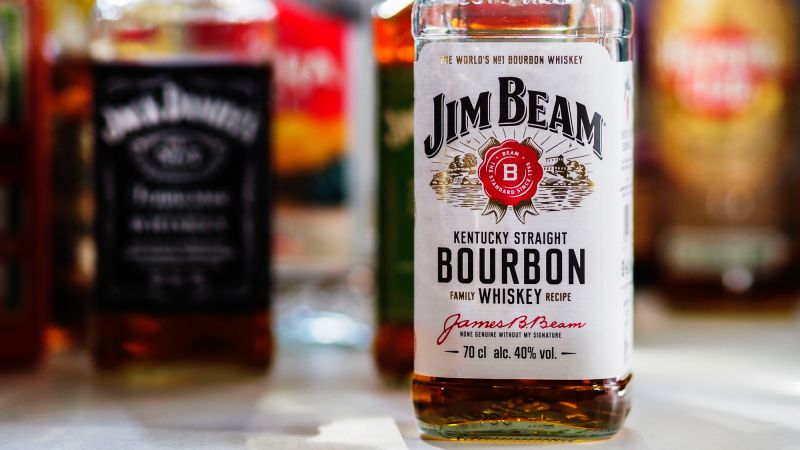
A prominent player in the bourbon industry, Jim Beam, is set to halt production at its main distillery starting January 1. This strategic decision, announced by the James B. Beam Distilling Co., comes in the wake of a significant surplus of aging barrels in Kentucky and ongoing uncertainties related to the trade wars initiated during Donald Trump’s presidency.
As of October, the Kentucky Distillers’ Association reported a record 16.1 million aging barrels of bourbon stored in state warehouses. This surplus has costly implications for distillers, who face taxes on these aging barrels. In 2024, Kentucky distillers encountered a $75 million tax bill related to aging barrels, reflecting a 27% increase from the previous year.
Suntory Global Spirits, the parent company of Jim Beam, stated that although production at the Clermont distillery will be paused, distilling operations will continue at the nearby Fred B. Noe craft distillery and the Booker Noe distillery located in Boston, Kentucky. The company plans to focus on site enhancements during this production pause.
In its communication, Jim Beam highlighted its commitment to assessing production levels based on consumer demand, indicating recent discussions held with its team concerning volume projections for 2026. As it stands, the organization has not indicated any impending layoffs and maintains a workforce of over 1,000 employees across its Kentucky locations.
Bottling and warehousing operations will remain active in Clermont, and Jim Beam is engaging with employees represented by the United Food and Commercial Workers union to address potential workforce impacts. Union representatives have yet to respond to requests for comments regarding the situation.
The whiskey and spirits industry has been grappling with challenges stemming from retaliatory tariffs due to the trade conflict, alongside shifts in consumer spending patterns amid economic pressures. The trade tensions have led to significant operational hurdles, particularly with Canadian officials imposing restrictions on American spirits, a rule that remains enforced in some provinces.
In March, the European Union proposed raising tariffs on American whiskey to 50% as a countermeasure against tariffs on steel and aluminum. However, in August, the EU announced a temporary suspension of retaliatory tariffs on U.S. imports, including distilled spirits and wine.
Eric Gregory, president of the Kentucky Distillers’ Association, emphasized the need for stable, tariff-free trade to ensure the future success of bourbon, the only native spirit of the United States. He pointed out the inherent challenges of long-term planning for a product that requires years to mature, further stressing the importance of a stable trade environment for the industry’s growth.