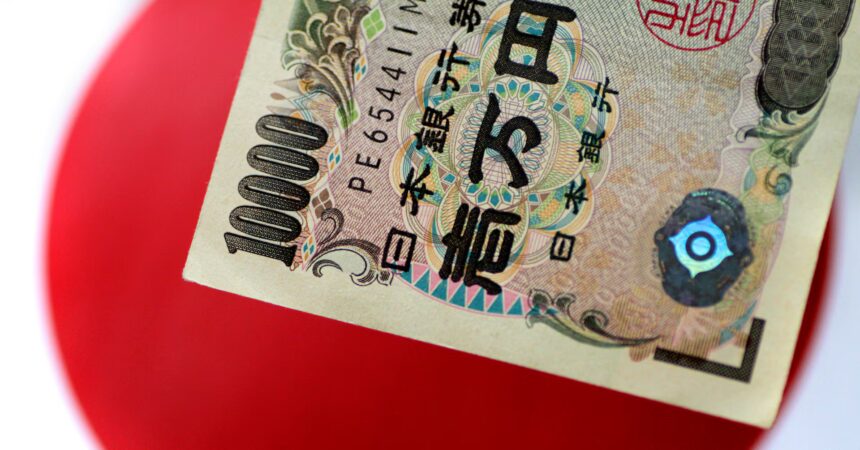
The Japanese yen struggled to recover as it hovered near a historic low against the euro on Monday. This follows remarks from Bank of Japan (BOJ) Governor Kazuo Ueda, who maintained a cautious tone in the aftermath of the recent interest rate hike on Friday. The currency was trading close to an 11-month low against the U.S. dollar and just shy of a 17-month low against the Australian dollar.
Japan’s top currency diplomat, Atsushi Mimura, expressed concerns regarding “one-sided and sharp” movements in foreign exchange markets, suggesting that authorities are prepared to take “appropriate actions against excessive moves.” However, his warnings had minimal immediate impact on market behavior.
On Friday, the BOJ raised the benchmark policy rate by a quarter of a percentage point, marking a peak of 0.75% that hasn’t been seen in three decades. While the accompanying statement indicated a readiness for further policy tightening, Governor Ueda underscored that the timing and speed of subsequent hikes would depend on forthcoming economic data.
Despite this potential for tightening, Ueda’s press conference did not provide any hawkish guidance. Market analysts noted that the lack of clear direction contributed to a further decline in the yen, which fell 1.3% against the euro and 1.4% against the dollar, alongside a 1.5% drop versus the Australian dollar. As the yen depreciated, Japanese government bonds faced a broad selloff, pushing the 10-year yield above the crucial 2% level for the first time since 1999.
Tony Sycamore, an analyst at IG, observed that the BOJ’s acknowledgment of “significantly low” real yields might imply further tightening in the future. However, the lack of specific insights during Ueda’s briefing failed to satisfy market expectations, resulting in a wave of yen selling. Analysts pointed out that should the dollar break decisively above 158 yen, it could pave the way for the year’s earlier high of about 158.87 yen.
On Monday, the U.S. dollar dipped slightly to 157.56 yen but remained close to last month’s peak of 157.90 yen. The euro also weakened a bit to 184.51 yen, nearing last week’s record high of 184.75 yen. The single currency was stable at $1.1714. Meanwhile, the Australian dollar saw a slight decline to 104.20 yen, remaining close to an earlier high of 104.39 yen, a level not reached since July of the previous year.
Market analysts from the Commonwealth Bank of Australia noted that the Australian-yen exchange rate still enjoys fundamental support from strong risk sentiment and the widening interest rate differentials between Australian and Japanese government bond yields. They projected a rise to 109 yen per Australian dollar by March, indicating ongoing confidence in the Australian currency’s performance against the yen.