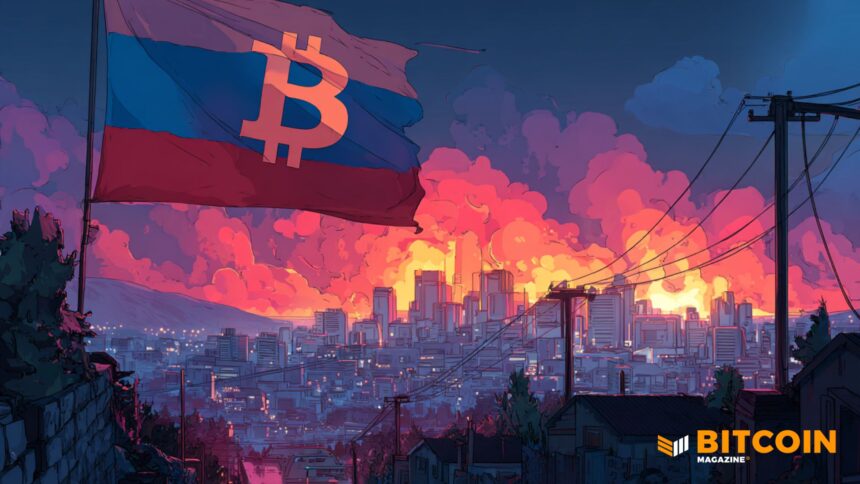
The Bank of Russia has unveiled a new regulatory framework aimed at overseeing cryptocurrency transactions within the country. In a recent concept paper submitted for government review, the central bank proposed a tiered access system that would allow both everyday investors and professional market participants to engage in the acquisition of digital assets while adhering to stringent risk management and usage guidelines.
The framework aims to support both qualified and non-qualified investors—each group subject to varying rules, limits, and testing requirements. This approach signifies a notable shift for Russia, which has been slowly adapting to the growing prominence of digital assets, particularly in light of ongoing economic sanctions that have altered the country’s financial infrastructure.
Earlier this year, the Bank of Russia permitted domestic banks to undertake limited crypto operations, though with rigorous oversight protocols in place. First Deputy Chairman Vladimir Chistyukhin emphasized that while the central bank maintains a cautious outlook on high-risk assets like bitcoin, there is a diminished rationale for completely restricting banks from engaging in such activities.
The concept paper also highlights an emerging trend where Russia has started utilizing bitcoin for settling oil trades with countries like China and India. These transactions reportedly involve routing payments through intermediaries to circumvent Western sanctions, indicating a shift in how Russia approaches international trade amid geopolitical pressures.
Under the proposed framework, non-qualified or retail investors will have specific limits on their cryptocurrency purchases. They will only be allowed to buy the most liquid cryptocurrencies, a list of which will be established in forthcoming legislation. Furthermore, these investors will need to pass a knowledge test and face an annual purchase cap of 300,000 rubles (approximately $3,800) through a single intermediary.
Qualified investors, conversely, would have the freedom to acquire any cryptocurrency without transaction limits, assuming they pass a risk comprehension test. However, investments in anonymous cryptocurrencies—those that obscure transactional data—are expected to remain prohibited.
The proposal formalizes the recognition of digital currencies and stablecoins as monetary assets, permitting their buying and selling. Nevertheless, their use as a means of payment within Russia is still forbidden, further underscoring the central bank’s stance against allowing cryptocurrencies to serve as an alternative to the ruble.
In terms of infrastructure, cryptocurrency trading is expected to be conducted through existing licensed entities, including exchanges, brokers, and trustees, all operating under current authorizations. Specialized crypto depositories and exchangers will have to meet additional regulatory requirements.
Moreover, Russian residents will be permitted to acquire cryptocurrencies from abroad and transfer previously purchased assets overseas through local intermediaries, although such transactions will require notifying tax authorities.
Beyond cryptocurrencies, the framework also encompasses digital financial assets (DFAs) and other digital rights, including utility tokens and hybrid instruments. The circulation of these instruments on open networks aims to attract foreign investment while offering investors access comparable to that of crypto assets.
The Bank of Russia is targeting July 1, 2026, for the completion of this legislative framework. Following that, the central bank plans to introduce penalties for illegal activities conducted by crypto intermediaries by July 1, 2027, aligning these penalties with those for illegal banking operations.
As a point of reference, Bitcoin is currently trading at $87,555 with a 24-hour trading volume of $47 billion, marking a 3% decline from the previous day. The price is about 3% below its seven-day high of $90,069 while remaining approximately 1% above its seven-day low of $87,096. With a circulating supply of nearly 20 million coins out of a maximum of 21 million, Bitcoin’s global market capitalization stands at roughly $1.75 trillion, reflecting a recent 3% decrease.