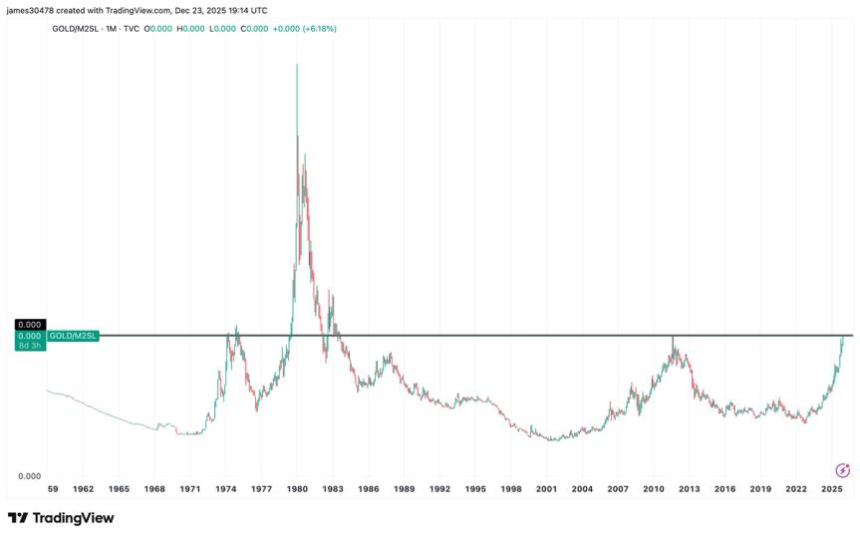
Gold is currently navigating a pivotal moment when evaluated against the U.S. money supply (M2SL), approaching a level it last encountered in 2011, which has not been exceeded since the 1970s. During that period, gold prices skyrocketed, more than tripling to a then-record of $700 per ounce over several years. Presently, gold is priced around $4,500 an ounce, a significant increase from $1,800 in 2011. This surge reflects a robust gain of approximately 70% this year.
In contrast, bitcoin, often dubbed “digital gold” by its proponents, has seen a downturn, currently hovering near a crucial support level reminiscent of its lows during the “tariff tantrum” in April. Bitcoin is priced at approximately $87,339.32, reflecting a decline of about 10% in recent months. Despite this downturn, bitcoin has continued to reach new highs relative to the U.S. money supply with each market cycle.
The M2 money supply encompasses the total stock of dollars in circulation within the U.S. economy, including cash, bank deposits, and liquid savings. As gold approaches a historical resistance zone against this backdrop, its performance starkly contrasts with that of bitcoin. While gold is on an upward trajectory this year, bitcoin’s recent struggles underscore the volatility and complexity of the cryptocurrency market.
Notably, the current support level for bitcoin aligns with the previous cycle high recorded in March 2024, hinting at a potential turning point for the digital asset. As both assets vie for investor attention, the dynamics between the traditional safe haven of gold and the burgeoning appeal of bitcoin continue to evolve, reflecting broader economic conditions and investor sentiment in a rapidly changing financial landscape.