A recent inquiry from a reader delves into the potential implications of a significant downturn in the stock market, specifically considering a drop of 20% to 30%. The reader posits that such a decline could be likened to “time travel,” allowing long-term investors to revisit better prices from a few years past. They reflect on cinematic time travel, suggesting that if character Biff Tannen from Back to the Future II had invested wisely, he might have profited tremendously.
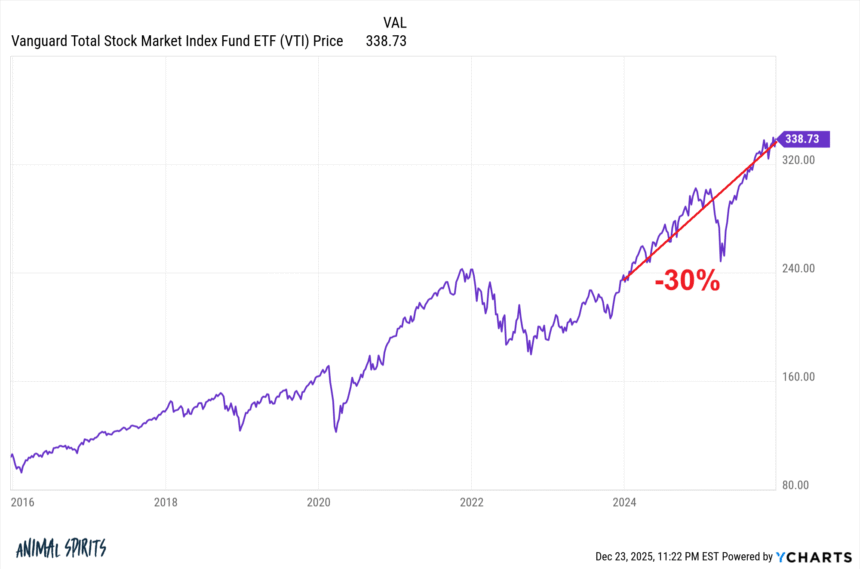
In analyzing the effects of a potential 30% market decline, it becomes clear that such a shift would revert the market to where it stood in January 2024, a period often viewed as relatively stable. The reader expresses that many would be inclined to purchase more stocks during this advantageous time, knowing what lies ahead.
However, with a significant market plunge often comes anxiety about subsequent declines. A drop of 40% could usher in fears of a 50% crash, returning the market to September 2020 levels. The reader reminds us that while these substantial losses would undoubtedly be disheartening, dollar-cost averaging through turbulent times could yield positive outcomes in the long run.
The conversation transitions to the reality that market crashes rarely occur in isolation; they are typically accompanied by larger economic crises or recessions that elevate unemployment rates. The author reflects on experiences from the Great Financial Crisis in 2008, highlighting how individuals who maintained their employment and continued to invest during challenging times ultimately benefited. The narrative emphasizes a well-known adage: a recession impacts your neighbor, while a depression affects you directly.
Investing during turbulent market periods requires both courage and a solid understanding of one’s personal circumstances. The notion of revisiting the past through a hypothetical market decline may not seem so bleak for long-term savers, provided they can navigate the associated personal and economic challenges.
The discussion also touches on various relevant topics in the investment world, including the debate between investing directly in Bitcoin versus Exchange Traded Funds (ETFs), the comparison between cryptocurrencies and tech stocks, the relationship between gas prices and economic recessions, and how to effectively transition investments into a comprehensive plan.
Overall, the dialogue raises thoughtful considerations on the relationship between patience, timing, and investment strategy.