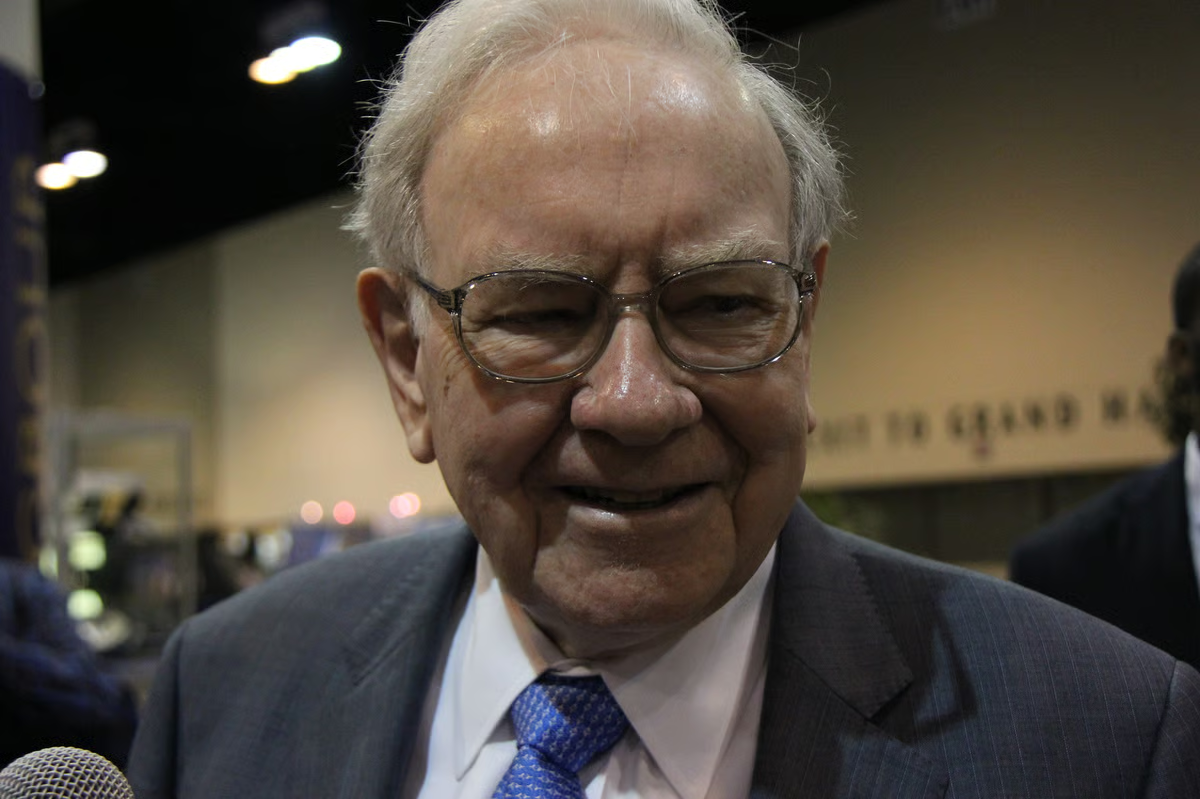
Berkshire Hathaway, under the stewardship of the soon-to-retire Warren Buffett, has amassed a staggering cash reserve approaching $400 billion, significantly exceeding the market capitalization of many large, established companies. In a time when many investors are exuberantly focusing on the rapid growth of artificial intelligence (AI) stocks, Buffett’s conglomerate is taking a different approach, opting for the safety of U.S. Treasuries that yield a modest 3.6%.
Buffett’s decision to hold such a substantial cash position is being interpreted as a prudent cautionary signal to the investment community. As the legendary investor prepares for his exit at the beginning of 2026, some analysts regard this as potentially his final message to Wall Street. His actions, rather than words, appear to underscore a growing skepticism about current market valuations, particularly given the surge of interest in AI technologies.
Since the start of the bull market in 2023, Berkshire Hathaway has seen its cash reserves swell from $100 billion to near $400 billion, thanks in part to a significant reduction in its holdings in key stocks, including a notable stake in Apple. What was once valued at nearly $200 billion is now recorded at about $60 billion. Additionally, Buffett has divested from other investments, like Bank of America, while largely steering clear of the AI sector, only recently acquiring a minor stake in Alphabet, Google’s parent company.
Despite the prevailing market frenzy around AI stocks, which are often trading at high price-to-earnings ratios, Buffett’s strategy indicates a lack of confidence in achieving returns that exceed these low-risk Treasury yields. Historical patterns suggest that whenever Buffett raises substantial cash, it often precedes underwhelming performance in the market in the years that follow.
While Buffett’s cash hoard does not signal an impending market crash, it does highlight the caution of a seasoned investor aware of the cyclical nature of the market. In previous bull markets, Buffett has made similar moves; for example, he returned capital to partners in 1968 at the height of a growth stock phase, only to see the market suffer significant declines shortly thereafter. His resistance to the dot-com craze of the late 1990s further exemplifies his discipline, as he was ultimately vindicated when the bubble burst.
Investors looking ahead to 2026 should take note of Buffett’s current strategy. While the exact timing of market shifts remains uncertain, the buildup of cash reserves suggests a perceived scarcity of appealing investment opportunities. This points to the likelihood that valuations are not historically favorable for new entrants.
However, retail investors do not necessarily need to replicate Buffett’s approach by liquidating their portfolios entirely. Individual circumstances vary widely, and many investors may have the luxury of time and resources to withstand market fluctuations. Nevertheless, Buffett’s significant cash accumulation serves as a cautionary tale for those heavily invested in speculative stocks or options, urging a careful reassessment of risk exposure as market conditions evolve. The takeaway is clear: maintaining a responsible and cautious investment strategy, particularly in volatile market environments, is wise for both individual and institutional investors alike.