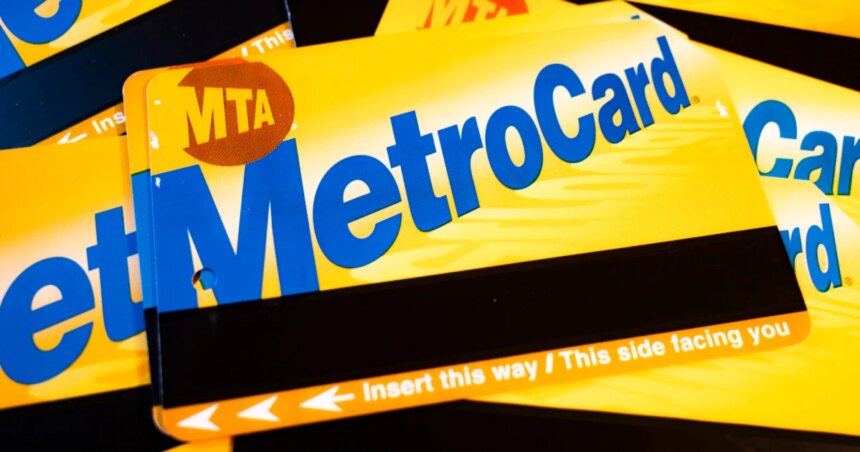
When the MetroCard was introduced to replace the iconic New York City subway token in 1994, it marked a significant modernization of one of the oldest transit systems in the world. However, after over three decades, the MetroCard, with its often problematic magnetic strip, is now set to retire. The final day to purchase or reload a MetroCard is Wednesday, as the Metropolitan Transportation Authority transitions fully to OMNY, a contactless payment system. This modern payment method allows riders to tap their credit card, phone, or smart device to pay their fares, mirroring the convenience found in many other daily transactions.
According to transit officials, over 90% of subway and bus fares are now paid using the OMNY system, which was launched in 2019. The move toward contactless payment reflects a broader trend seen in major cities worldwide, such as London and Singapore, which have long utilized similar systems. Notably, U.S. cities like San Francisco have also implemented their versions of contactless payments, joining Chicago and several others.
The MetroCard was revolutionary in its heyday, transforming how New Yorkers commuted. Jodi Shapiro, curator at the New York Transit Museum in Brooklyn, emphasizes the MetroCard’s significance in changing perceptions and behaviors around public transportation fare payment. Prior to its introduction, riders relied on tokens, which had been in use since 1953. When the subway first opened in 1904, fare tickets were just a nickel—equivalent to approximately $1.82 today.
The transition from tokens to MetroCards was not without resistance. Shapiro noted that while tokens were functional, the introduction of the MetroCard required a new way of thinking for the city’s commuters. The Metropolitan Transportation Authority (MTA) initiated public campaigns to educate users on the proper way to swipe the then-blue cards, in hopes of reducing the frustrations caused by error messages and lost fares.
MetroCards soon became collectors’ items, with special editions celebrating significant events, including the “Subway Series” in the 2000 World Series. The cards featured designs honoring New York’s cultural icons, from artists like David Bowie and Olivia Rodrigo to historic hip-hop figures. Collectors, such as Lev Radin from the Bronx, valued cards that showcased New York City, its attractions, and its diverse culture.
Over the years, perfecting the swipe technique became somewhat of a badge of honor among New Yorkers, setting apart seasoned riders from tourists. Notable public figures, such as Hillary Clinton during her 2016 presidential campaign, demonstrated the challenges of adapting to the new system, attracting both amusement and empathy from locals.
The transition to OMNY, however, has faced mixed reactions. Unlike the complex adjustments of the MetroCard rollout, OMNY has been designed to be more user-friendly. Riders reluctant to embrace technology can still purchase OMNY cards similar to MetroCards, and existing MetroCards will remain operational until 2026, allowing users to utilize remaining balances.
The MTA asserts the change will save the agency approximately $20 million annually in costs associated with the MetroCard. OMNY also introduces benefits such as unlimited free rides within a week, capping fares after 12 rides, though the cap will increase to $35 once the fare rises to $3 in January.
Despite these advancements, some critics have voiced concerns over privacy issues and data surveillance associated with the new system. On a recent morning, 70-year-old Ronald Minor, a MetroCard user, expressed his sorrow over the looming retirement of the cards. Minor, who has an OMNY card, finds the new vending machines challenging to navigate. “It’s hard for the elders,” he remarked, urging the transit authority to consider the needs of older riders.
Another user, John Sacchetti, appreciated the ability to see his balance while using the MetroCard but acknowledged that adapting to new technology always takes time. “Once I get used to it, I think it’ll be okay,” he said while commuting uptown. As New York City moves toward a new era of transit payment, the end of the MetroCard marks not just a technological shift, but also a moment of nostalgia for a generation of riders.