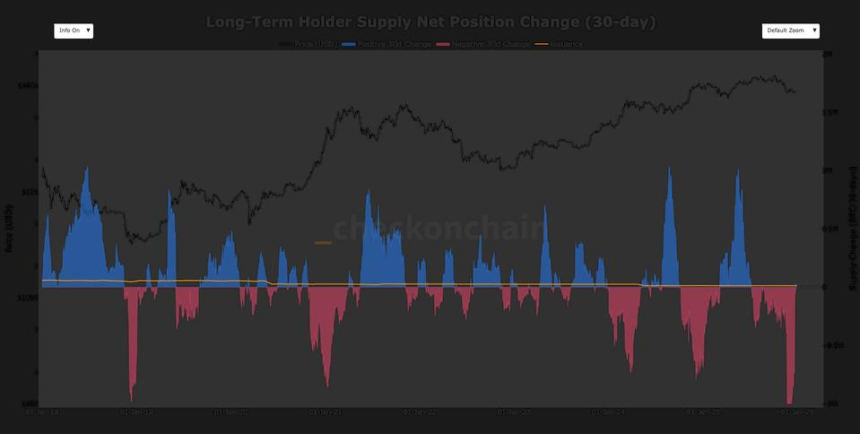
Long-term holders (LTHs) of Bitcoin have recently resumed their accumulation strategy for the first time since July. Defined as individuals or entities that have held Bitcoin for a minimum of 155 days, LTHs have collectively acquired approximately 33,000 BTC over the past month, according to analytics from checkonchain.
This shift in LTH behavior comes after a year marked by significant sell pressure from this group, primarily due to distribution during price corrections, which have been exacerbated by miners capitulating and selling assets to cover operational costs. The latest influx of purchases by LTHs indicates a potentially optimistic outlook, as they were previously a significant source of Bitcoin distribution.
Notably, miners, who are often compelled to sell Bitcoin while operating at a loss, contributed to sell pressure in the market alongside LTHs. The transition of short-term holders to long-term holders has been noteworthy as well, suggesting that buyers from the last six months are now transitioning into LTH status, thus outpacing previous distributions.
During the dramatic price correction of October, LTHs sold more than 1 million BTC, marking the most significant sell-off from this group since 2019. This particular event closely mirrored a past bear market low when Bitcoin’s price plummeted to around $3,200. The correction in October was the third major distribution phase by LTHs since the current market cycle began in 2023.
Subsequent to the October downturn, the first distribution phase occurred in March of the same year when Bitcoin hit $73,000, resulting in the sale of over 700,000 BTC. The second instance took place in November when the price climbed to approximately $100,000, leading to more than 750,000 BTC being offloaded by LTHs.
As Bitcoin continues to fluctuate in value, the recent trend of accumulation by long-term holders may indicate a shift in market sentiment, potentially signaling renewed confidence in the cryptocurrency’s long-term viability. The actions of this cohort could play a crucial role in shaping future market dynamics as they increasingly re-enter the buying phase.