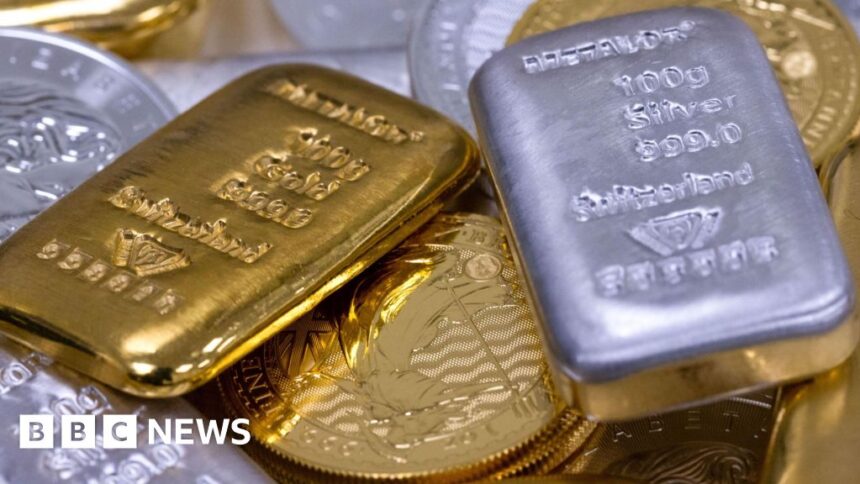
Gold and silver have experienced a tumultuous end to a year that is shaping up to be their most lucrative since 1979. Gold prices surged more than 60% over the year, reaching a historic peak of over $4,549 (£3,378) per ounce, before experiencing a slight decline post-Christmas, settling around $4,350 as the year came to a close. In parallel, silver prices hovered around $74 per ounce after hitting an all-time high of $83.62 earlier in the week.
Several factors contributed to the substantial rise in the precious metals market. Anticipation of further interest rate cuts, a wave of gold purchases by central banks, and heightened interest in “safe haven” assets driven by global tensions and economic unease have all played pivotal roles. Rania Gule from trading platform XS.com noted that the primary catalyst for this pricing surge is the expectation that the US Federal Reserve is likely to reduce interest rates again in 2026.
This year also witnessed central banks around the world accumulating hundreds of tons of gold to bolster their reserves, a trend highlighted by the World Gold Council. Daniel Takieddine, co-founder of Sky Links Capital Group, pointed out that silver prices have been buoyed by “supply tightness and industrial demand.” A significant factor influencing silver’s market has been China’s announcement to limit the export of this precious metal, which plays a crucial role in various industrial processes.
In October, China’s Ministry of Commerce imposed new restrictions on the exports of silver, along with tungsten and antimony, emphasizing the need to enhance resource and environmental protection. Tesla CEO Elon Musk reacted to these restrictions on social media, expressing concern over the implications for industries reliant on silver.
Moreover, Takieddine emphasized that a considerable influx of capital into the precious metals sector, particularly through exchange-traded funds (ETFs), has further driven prices upward. ETFs, which allow investors to engage with metals without the need for physical ownership, are becoming an increasingly popular investment vehicle.
Looking ahead, Gule anticipates that gold prices will continue to increase in 2026, albeit at a more stable pace than the record highs seen in 2025. Meanwhile, Takieddine suggests that while silver could also rise in the forthcoming year, investors should be prepared for potential sharp corrections following any rallies. The interplay of these economic, investment, and geopolitical dynamics indicates a complex outlook for precious metals in the near future.