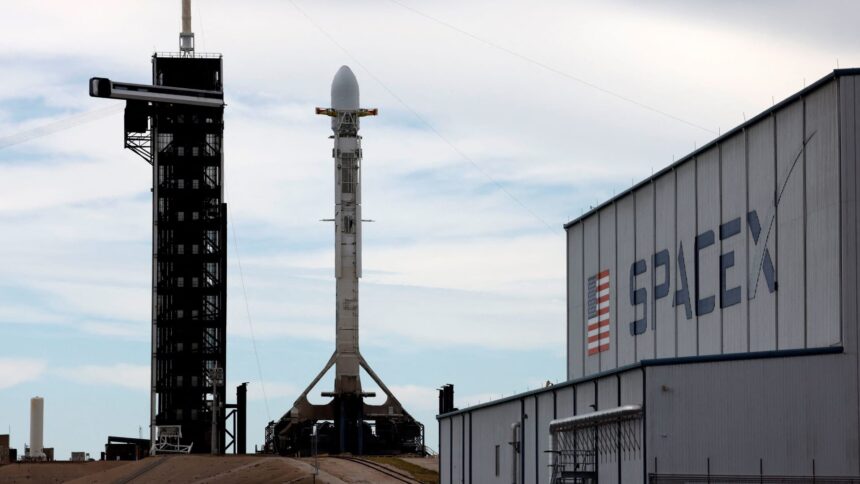
Billionaire entrepreneur Elon Musk is reportedly moving forward with plans to take SpaceX public, prompting excitement among investors who are eager for a piece of what could be the largest initial public offering (IPO) in history. In a statement made late last month, Musk confirmed the accuracy of reports regarding SpaceX’s intention to go public this year. The company has previously been valued at approximately $800 billion, and now it is eyeing a market capitalization of around $1.5 trillion upon its public debut. This projected valuation would surpass the record set by the Saudi Aramco IPO in 2019.
As anticipation builds, significant private investments have already been made in SpaceX by prominent figures on Wall Street. Ron Baron of Baron Capital disclosed that roughly a quarter of his personal portfolio is invested in SpaceX, and it stands as one of the largest positions in the Baron Partners Fund. Additionally, Cathie Wood’s ARK Venture Fund lists SpaceX as its principal holding, highlighting the confidence that top investors have in the space technology firm.
SpaceX’s leadership in the low-earth orbit (LEO) sector has been underscored by its record-breaking launch activity in recent months. According to a report by Jefferies, the company achieved an unprecedented 971 LEO launches in the last quarter, marking a more than 30% increase from the previous quarter and a staggering 70% rise year-over-year. In total, SpaceX launched over 3,200 satellites in 2025, reflecting a year-on-year growth of more than 60%. Analyst Kevin Lin noted to clients that SpaceX’s launch volume is “accelerating” while competitors, such as Amazon’s LEO arm, appear to be lagging despite their efforts to establish a foothold in the market.
In a strategic response to an increase in demand, technology companies are also exploring the potential of space-based data centers to support the burgeoning artificial intelligence (AI) industry. Lin emphasized that space data centers might become pivotal in driving the total addressable market for the LEO sector. As companies look for solutions to the Earth’s energy constraints, the concept of utilizing space for data storage and processing is gaining traction. Deutsche Bank analyst Edison Yu acknowledged the numerous technical challenges involved but expressed optimism about developments being pursued by major players like Google and OpenAI in this area.
Despite the burgeoning prospects for SpaceX, Musk’s other venture, Tesla, has encountered setbacks recently. The electric vehicle manufacturer reported lower-than-expected delivery numbers for the fourth quarter, which led to Tesla falling behind BYD as the leading global EV seller for the first time. Although Tesla shares saw an increase of over 11% in 2025, this growth was subdued compared to the stock’s remarkable surges in the prior two years.
As the countdown to SpaceX’s IPO continues, the financial landscape for Musk and his ventures remains dynamic, marked by both challenges and promising opportunities.